Trump Marks Hormuz as U.S. Territory
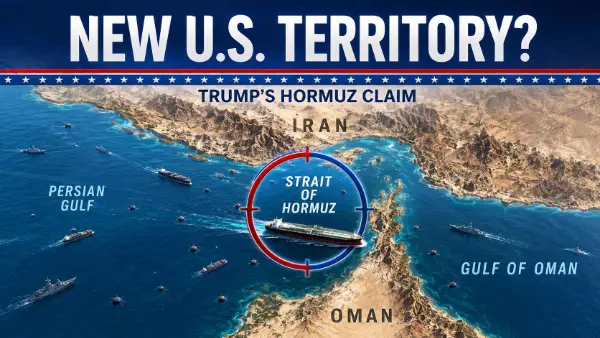
WASHINGTON — President Donald Trump escalated his confrontation with Iran on Tuesday by sharing a map on Truth Social that labeled the Strait of Hormuz “New U.S. Territory.”
The image featured a large circle around the narrow waterway connecting the Persian Gulf with the Gulf of Oman. However, the marking also appeared to cover portions of Iran and Oman, underscoring the extraordinary nature of the claim. Trump offered no explanation with the map.
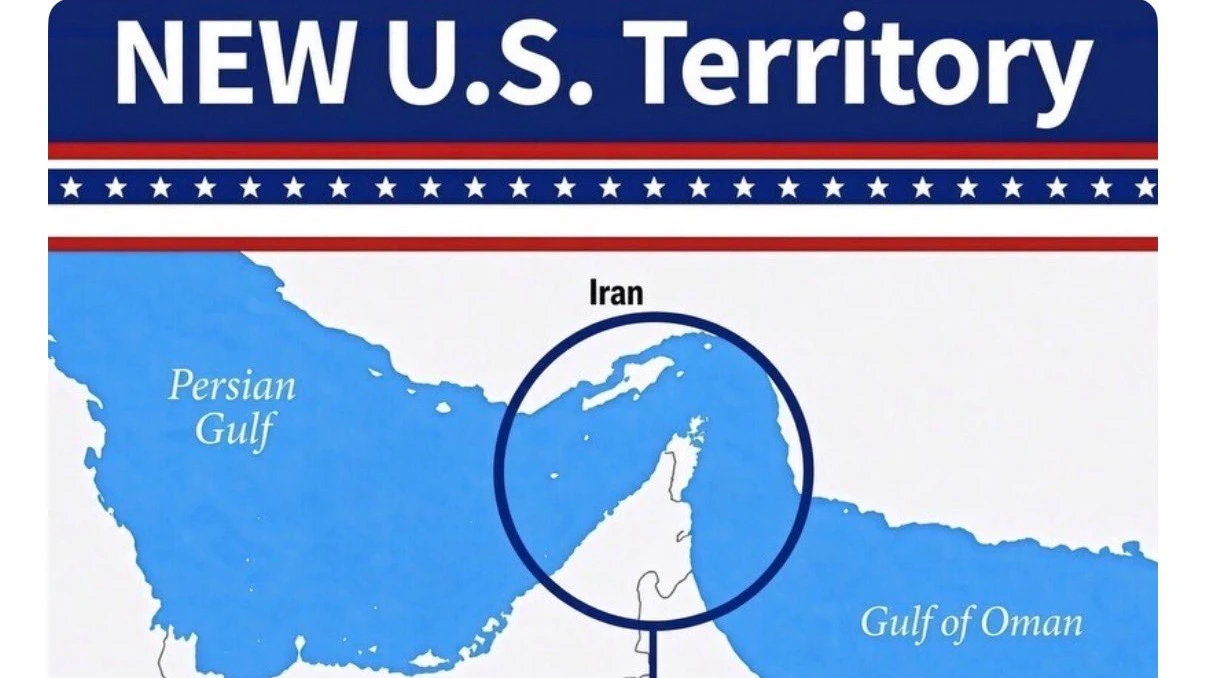
Trump first floated the idea of making the strait American territory on Friday. When questioned Monday, he described it as a “great idea” and said the United States controlled the waterway through its naval blockade.
A social media post or presidential declaration, however, cannot legally transform the strait into U.S. territory. The waterway runs through the territorial seas of Iran and Oman. International maritime law grants ships and aircraft transit rights through straits used for international navigation, but those rights do not give another country ownership of the passage.
Trump separately announced Tuesday that no negotiations with Iran were underway or scheduled. He said the U.S. naval blockade of Iranian ports remained in force while claiming that the Strait of Hormuz was open and that all naval mines had been removed or destroyed.
Iran disputed that account. Iranian officials said the strait would remain restricted until Washington lifted its blockade and oil sanctions, released frozen Iranian assets and ended military operations and threats.
Shipping data also showed that vessel traffic remained far below normal levels. A ship traveling through the strait was struck Tuesday by an unidentified projectile, damaging its engine room and causing a crew casualty.
The increasingly aggressive rhetoric comes as the Pentagon evaluates whether to reduce its long-term military presence in the Persian Gulf. The preliminary analysis is examining whether heavily damaged American bases should be rebuilt in their existing locations or whether troops and equipment should be moved farther west.
Approximately 40,000 U.S. military personnel are ordinarily stationed across nearly 20 regional sites. Defense officials emphasized that the assessment remains “prudent planning,” not a formal review or final decision.
 News Staff
 -
-
World at War
Strait of Hormuz
“New U.S. Territory.”
-
358 views -
0 Comments -
0 Likes -
0 Reviews
-
-
World at War
Strait of Hormuz
“New U.S. Territory.”
-
358 views -
0 Comments -
0 Likes -
0 Reviews




 Loading ...


