Iran’s War of Time
WASHINGTON/TEHRAN — Iran is signaling that time itself may be one of its most important weapons in the conflict with the United States. But predictions that the war—and today’s painfully high fuel prices—will necessarily continue until President Donald Trump leaves office in January 2029 go beyond what has been established.
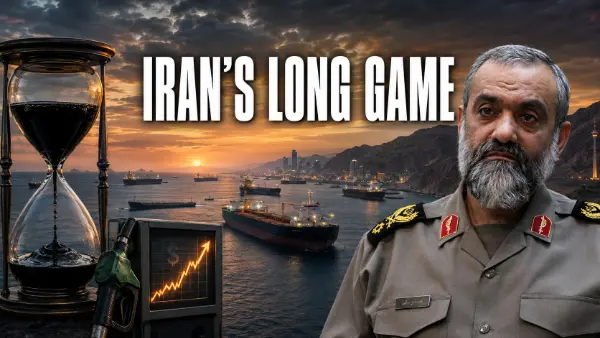
In a rare interview, Brig. Gen. Mohammad Reza Naqdi, a senior adviser to the commander of Iran’s Islamic Revolutionary Guard Corps, was asked whether Tehran intended to prolong the war until Trump was gone. Naqdi replied that extending the conflict into the next presidential term was one possible way to impose attrition and demonstrate the cost of attacking Iran. He also claimed that Iran was gaining combat experience and discovering weaknesses in the U.S. military.
His statement is significant, but it should not be mistaken for a formal timetable adopted by Iran’s government. It is better understood as strategic messaging: Tehran wants Washington, financial markets and American voters to believe that Iran can absorb pressure longer than the United States can tolerate the political and economic consequences.
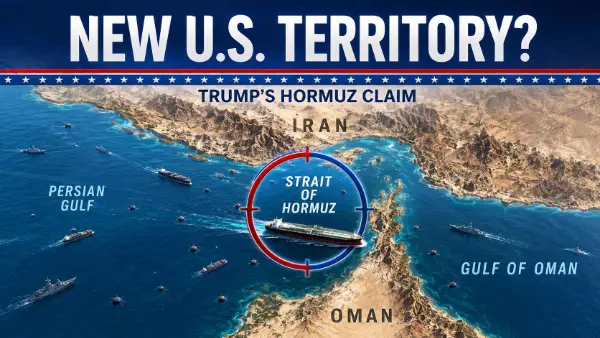
Energy remains Iran’s strongest source of leverage. Before the conflict, approximately one-fifth of the world’s daily oil and liquefied-natural-gas shipments passed through the Strait of Hormuz. Gulf exports recently remained about 40 percent below prewar levels, while uncertainty over shipping pushed Brent crude above $82 a barrel in early August.
American drivers are already paying considerably more. The national average for regular gasoline reached approximately $4.04 a gallon on Aug. 12, compared with about $2.98 immediately before the war—an increase of roughly 35 percent. Diesel averaged approximately $5.36, creating additional costs for trucking, agriculture and almost every product transported by road.
However, gasoline prices are not guaranteed to remain at current levels until 2029. They will depend on shipping access through Hormuz, global petroleum demand, alternative production, refinery capacity and the ability of governments to replenish depleted emergency reserves. Even a partial reopening could produce substantial relief.
A sustained $10 increase in the cost of every barrel consumed worldwide would represent close to $1 trillion in additional gross spending over two and a half years. That illustrates the scale of the risk, although it is not the same as a $1 trillion loss to the global economy, because higher payments also become income for oil producers.
Iran is paying an enormous price as well. The International Monetary Fund projects that its economy will contract 5.4 percent in 2026 while consumer-price inflation approaches 69 percent. Families are increasingly purchasing food, medicine and other necessities through credit or installment plans.
Washington is applying pressure through sanctions and a naval blockade of Iranian ports, but the United States also faces constraints. Trump has acknowledged that supplies of some weapons are “a little bit tighter,” while insisting that defense manufacturers are increasing production. Public support is another vulnerability, with only 35 percent of Americans approving of the war in a recent national poll.
Comparisons with the Iran hostage crisis that damaged President Jimmy Carter are politically tempting but remain speculative. Trump is not running for reelection, although Republican control of Congress will be tested in November.
The most accurate conclusion is therefore less dramatic but more troubling: Iran has not demonstrated that it can fight until 2029, and fuel prices are not destined to remain elevated that long. Tehran is nevertheless betting that economic discomfort, limited weapons inventories and electoral pressure will force Washington to compromise first.
 News Staff
 -
-
World at War
Iran
Brig. Gen. Mohammad Reza Naqdi
Prolong war to January 2029
-
484 views -
0 Comments -
0 Likes -
0 Reviews
-
-
World at War
Iran
Brig. Gen. Mohammad Reza Naqdi
Prolong war to January 2029
-
484 views -
0 Comments -
0 Likes -
0 Reviews




 Loading ...


