Iran Strikes Back as War Escalates
The war between the United States and Iran entered another dangerous phase Monday after Tehran fired ballistic missiles at American military positions in Jordan, prompting President Donald Trump to promise a forceful response and declare that Iran was “dead.”
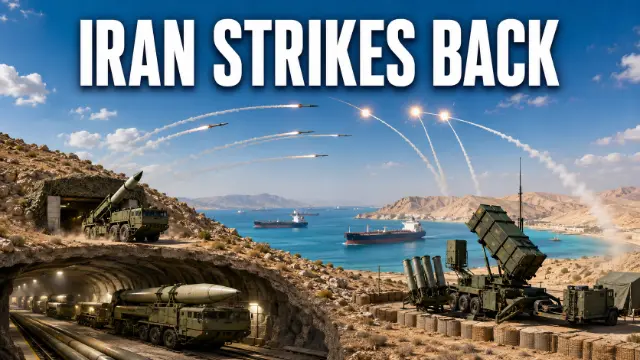
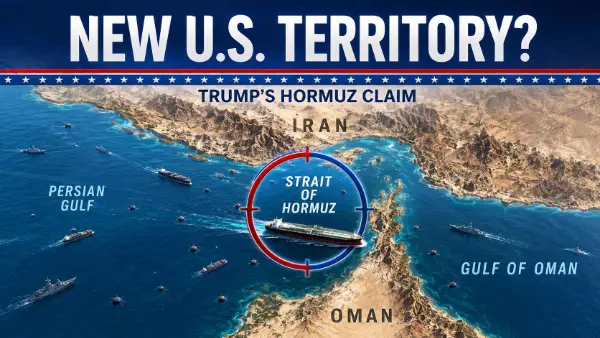
Iran’s Islamic Revolutionary Guard Corps said it targeted King Hussein Air Base and Al Azraq Air Base in retaliation for a U.S. strike on Iranian rocket launchers on Larak Island, strategically located in the Strait of Hormuz. U.S. Central Command described its operation on Larak as limited and precise, saying Iranian forces were preparing to threaten international shipping with rockets and sea mines.
Jordan’s military reported intercepting eight missiles that entered its airspace. American officials said nearly all incoming weapons were destroyed and that there was no significant damage. No American casualties had been confirmed in the initial reports.
Trump nevertheless promised another military response. “We will hit them hard,” he told Fox News. On Truth Social, he described Iran as a failed nation without an effective navy or air force and with an economy and government in chaos. “Iran is officially a Failed Nation. IT’S DEAD!” he wrote.
Iran is unquestionably weaker than it was when the war began six months ago. American and Israeli attacks have destroyed missile-production buildings, air-defense systems, naval assets, storage facilities and launch sites. Iranian missile and drone attacks reportedly fell by about 90 percent during the heaviest phase of fighting.
But “weaker” does not mean disarmed.
How Does Iran Still Have Missiles?
Iran spent decades building the Middle East’s largest and most diverse missile force precisely because its conventional air force was outdated and vulnerable. Before the current war, the country possessed thousands of ballistic missiles, cruise missiles, rockets and attack drones
Many were distributed among underground “missile cities,” mountain tunnels, hardened bunkers and concealed storage locations. Iran also uses mobile launchers that can be dispersed, hidden and moved before an attack.
In March, U.S. officials told Reuters that they could confirm the destruction of only about one-third of Iran’s missile arsenal. Another portion may have been damaged or buried, but its condition remained uncertain. That left Iran with an unknown—but clearly still operational—reserve.
Iran also produces many of its missiles domestically. Sanctions have restricted access to specialized materials and electronics, but Iranian procurement networks have continued obtaining industrial components and missile-fuel ingredients through intermediaries and foreign suppliers. Historical assistance from North Korea, China and other sources helped Iran build the foundation of its program, but there is no evidence that the missiles fired at Jordan were newly imported weapons.
In short, Iran does not need to replace its entire arsenal to remain dangerous. Even a small surviving percentage can produce repeated attacks against fixed American bases, Gulf infrastructure and shipping routes.
The Growing American Concern
The United States faces its own ammunition problem. Months of missile defense have consumed large numbers of Patriot and THAAD interceptors. Long-range American precision weapons have also been used at an unusually high rate.
Senior military commanders have reportedly warned against keeping more than 50,000 U.S. troops, along with ships and aircraft, tied to the Middle East indefinitely. The concern is not that America is defenseless, but that a prolonged Iran campaign could weaken its ability to respond to a crisis involving China, Russia or North Korea.
The Pentagon announced new long-term production agreements Monday to accelerate deliveries of Patriot and THAAD components, but expanding missile manufacturing takes years—not weeks.
What Comes Next?
The most immediate danger is an escalating cycle: a U.S. strike brings an Iranian response, which produces a larger American counterstrike, followed by another Iranian attack. That pattern could eventually cause significant casualties even when most missiles are intercepted.
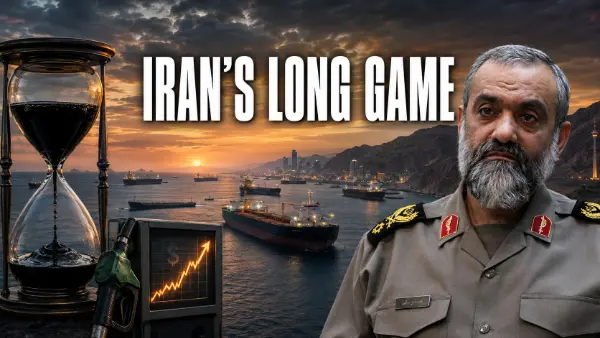
Iran has threatened to respond to future American attacks with “dozens of times” greater force and warned that no regional target is beyond its reach. Tehran may also intensify pressure on shipping through the Strait of Hormuz, threatening global oil supplies and driving energy prices higher.
Trump’s description of Iran as “dead” reflects the country’s extraordinary military and economic damage, but it is not an accurate description of its remaining ability to fight. Iran still possesses missiles, drones, mobile launchers, underground stockpiles and the geographic advantage of operating close to American bases throughout the region.
The country may be battered, economically unstable and militarily diminished. It is not harmless—and the latest missile attack proves that declaring the war won is much easier than bringing it to an end.
 Max Liebermann
 -
-
World at War
Jordan
“Iran is officially a Failed Nation. IT’S DEAD!”
-
379 views -
0 Comments -
0 Likes -
0 Reviews
-
-
World at War
Jordan
“Iran is officially a Failed Nation. IT’S DEAD!”
-
379 views -
0 Comments -
0 Likes -
0 Reviews




 Loading ...


