Hormuz Crisis Deepens: Trump Promises Response After U.S. Helicopter Shoot-Down
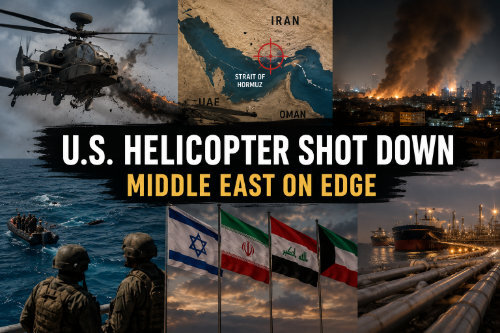
TEHRAN/WASHINGTON — Tensions across the Middle East remained high Tuesday as the fragile ceasefire between Israel and Iran came under renewed strain following the reported shoot-down of a U.S. Apache attack helicopter over the Strait of Hormuz.
According to U.S. sources, the helicopter was brought down overnight near the strategic waterway that serves as a vital route for global oil shipments. The two pilots aboard survived the incident and were successfully rescued. U.S. President Donald Trump announced the development on Truth Social, saying he had been briefed by military officials and declaring that the United States would “necessarily” respond to the attack. Trump did not reveal what form any retaliation might take.
The incident unfolded as military and political tensions continued to simmer despite a ceasefire that initially appeared to halt direct fighting between Israel and Iran. While both sides paused major operations Monday, reports emerged Tuesday that Israel carried out strikes near the southern Lebanese city of Tyre, underscoring the volatility of the region.
Meanwhile, Israeli media reported that Prime Minister Benjamin Netanyahu told cabinet members Israel may ultimately have to confront Iran without direct American support. According to i24News, Netanyahu warned that Israel could find itself facing Tehran alone, potentially bearing the financial costs of expanded military operations and increased diplomatic isolation. While emphasizing that Israel would prefer continued U.S. backing, Netanyahu reportedly said his government is preparing for all scenarios.
Iranian officials responded with a mixture of warnings and diplomatic messaging. Foreign Minister Abbas Araghchi called for the withdrawal of U.S. military forces from the region, arguing that foreign deployments create constant risks from accidents, human error, or becoming caught in crossfire. Although he did not directly reference the downed Apache helicopter, his comments came shortly after reports of the incident.
The speaker of Iran's parliament, Mohammad Bagher Ghalibaf, also delivered a pointed message aimed at Washington. Writing on social media, he said Iran prefers diplomacy but warned that if commitments are broken, Tehran is prepared to respond. “We prefer the language of diplomacy, but we speak other languages far more fluently,” he wrote.
Iran reported casualties from Israeli military operations earlier this week. State-affiliated news agencies said two air-defense soldiers were killed during Israeli attacks, while a third fatality was later reported. Emergency officials also reported 15 injuries, most of them in the southern province of Khuzestan.
Political rhetoric continued to escalate. Iranian lawmaker Manouchehr Mottaki reportedly called on Iran's judiciary to issue death sentences against both Trump and Netanyahu, invoking the 1989 fatwa against author Salman Rushdie. The remarks drew international attention and added to concerns over further deterioration in relations.
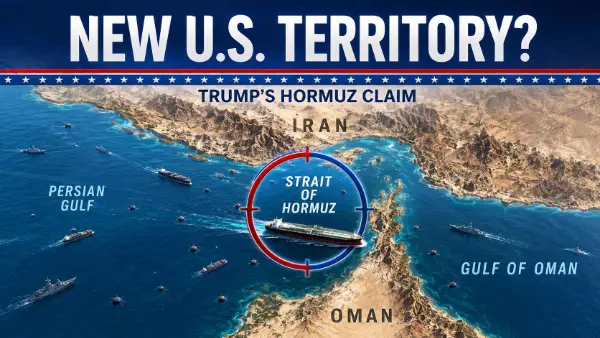
The regional conflict is also producing economic consequences. Iraq's new prime minister, Ali al-Zaidi, is reportedly planning a visit to Washington to seek support from the Trump administration as disruptions tied to the conflict and the near-blockade of the Strait of Hormuz continue to affect Iraq's economy.
Kuwait, meanwhile, confirmed it is exploring alternative export routes for crude oil. Kuwait Petroleum Corp. said discussions are underway with Saudi Arabia and the United Arab Emirates regarding possible expansion of pipeline networks to bypass shipping bottlenecks in the Gulf.
Even sporting events are feeling the impact. Iran's national soccer team announced it will travel early to Los Angeles ahead of its June 15 World Cup opener against New Zealand after uncertainty over travel arrangements and entry procedures into the United States.
With military forces on alert, energy markets closely watching developments in the Gulf, and Washington signaling a possible response to the helicopter incident, the Middle East remains on edge as diplomats race to prevent a broader regional confrontation.
 News Staff
 -
-
World at War
Benjamin Netanyahu
shoot-down of a U.S. Apache attack helicopter
Israel could find itself facing Tehran alone
-
0.9K views -
0 Comments -
0 Likes -
0 Reviews
-
-
World at War
Benjamin Netanyahu
shoot-down of a U.S. Apache attack helicopter
Israel could find itself facing Tehran alone
-
0.9K views -
0 Comments -
0 Likes -
0 Reviews




 Loading ...


