DLNews War of the World
10 Days of Fire: Oil Rockets Past $125 as Iran War Shakes the World
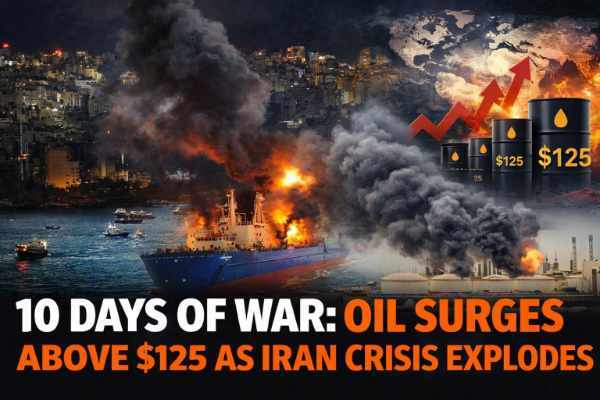
TEHRAN / WASHINGTON / TEL AVIV — The war between Iran, the United States, and Israel has now entered its tenth explosive day, and the world is watching with growing anxiety as missiles fly, markets tremble, and oil prices surge beyond $125 a barrel, threatening to ignite a global economic shock.
What began as a rapid military confrontation has quickly expanded into a regional conflict stretching across the Persian Gulf, pulling in neighboring countries, global powers, and the fragile arteries of the world’s energy supply.
Here is the 10-day live ticker of the war shaking the global economy.
Day 1–2: The Spark
The conflict ignited after coordinated U.S. and Israeli strikes targeted Iranian military infrastructure linked to its nuclear and missile programs. Iran responded swiftly, launching waves of missiles and drones toward Israel and U.S. military facilities across the region.
Airspace across much of the Middle East closed almost immediately, stranding thousands of travelers as airlines canceled flights.
Day 3–4: The Gulf Ignites
Iran expanded its retaliation, firing missiles toward multiple countries in the Gulf region. Defensive systems in several states intercepted many of the projectiles, but the attacks sent shockwaves through the region.
Drone strikes also hit infrastructure in Bahrain, injuring civilians and damaging homes and vital water facilities.
Day 5–6: The Oil Shock Begins
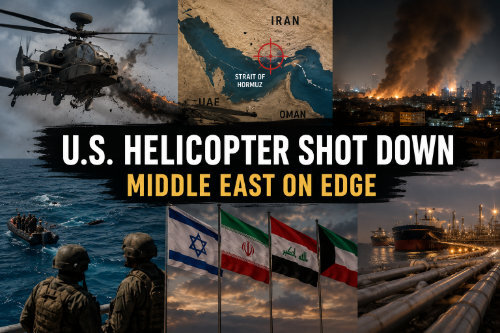
As tensions intensified, the Strait of Hormuz—one of the most important shipping lanes on Earth—effectively shut down due to military threats and blockades.
Oil traders reacted instantly. Brent crude surged nearly 30 percent, jumping toward $120 per barrel, its sharpest increase since the early pandemic years.
Production cuts soon followed. Kuwait and the United Arab Emirates reduced output as storage capacity filled amid disrupted shipping routes, while Iraq also began limiting production.
Day 7–8: Markets Panic
Asian economies, heavily dependent on Middle Eastern energy, felt the first economic shock.
South Korea introduced an emergency government price cap on gasoline and diesel, the first such move in nearly three decades. Stock markets in Seoul and Tokyo plunged as investors braced for prolonged energy disruption.
In the Philippines, the government announced energy-saving measures, including a temporary four-day workweek for many public agencies.
Day 9: Power Shift in Tehran
Following the death of Iran’s longtime supreme leader, Mojtaba Khamenei, son of Ayatollah Ali Khamenei, was appointed the country’s new spiritual leader.
Within hours of his appointment, Iranian state media reported the first missile strikes against Israel under his leadership, signaling that the conflict was far from cooling.
Day 10: Oil Breaks $125 — and the War Widens
Early Monday, Israel announced fresh airstrikes against Iranian targets including missile launch sites, rocket production facilities, and Basij militia headquarters.
Smoke once again rose over Tehran.
Meanwhile, oil prices surged past $125 per barrel, as traders feared a prolonged closure of the Strait of Hormuz and further attacks on energy infrastructure.
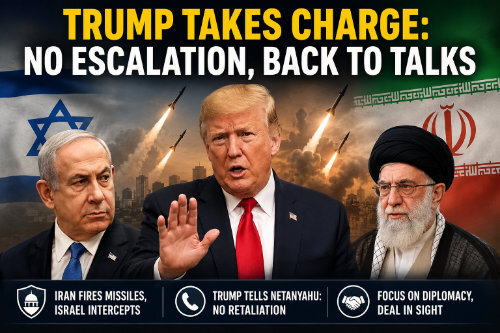
U.S. President Donald Trump attempted to calm markets, saying rising oil prices are a temporary effect of the conflict.
“The destruction of the Iranian nuclear threat will bring prices down rapidly,” he wrote on Truth Social, adding in capital letters that “ONLY FOOLS WOULD THINK OTHERWISE.”
A War With Global Consequences
The conflict has already drawn in unexpected players. Ukraine has sent drone specialists and interceptor systems to help defend U.S. bases in Jordan, while Gulf states warn Tehran of “massive consequences” if attacks continue.
For the global economy, the stakes are enormous.
Nearly one-fifth of the world’s oil supply normally passes through the Strait of Hormuz, and with that lifeline now under threat, analysts warn that energy prices — and gasoline at the pump — could soon climb dramatically.
In short, the missiles may be flying in the Middle East, but the economic shockwaves are already traveling around the globe.
And if the first ten days are any indication, the world may only be at the beginning of this crisis.
 News Staff
 -
-
World at War
Live-ticker first 10 Das Iran war
-
568 views -
0 Comments -
0 Likes -
0 Reviews
-
-
World at War
Live-ticker first 10 Das Iran war
-
568 views -
0 Comments -
0 Likes -
0 Reviews