US-Iran Conflict: Where Things Stand Now
July 8, 2026
The war that erupted on February 28, 2026 — when US and Israeli strikes killed Iranian Supreme Leader Ali Khamenei and other senior officials — has flared back into open conflict this week, following months of a fragile, on-and-off ceasefire.
How the Truce Was Built
On June 17, the United States and Iran signed the Islamabad Memorandum, a formal understanding that set a 60-day window to negotiate final peace terms, alongside a commitment to reopen the Strait of Hormuz to shipping. Traffic through the strait had been gradually picking up in the weeks that followed, though it remained well below pre-war
Through late June and into July, negotiators met in Doha, with US officials describing the talks as "going well." Technical delegations from the US and Iran, along with Qatari and Pakistani mediators, worked through the details even as Tehran warned it would respond "decisively and swiftly" to any US interference in the strait.
How It Fell Apart
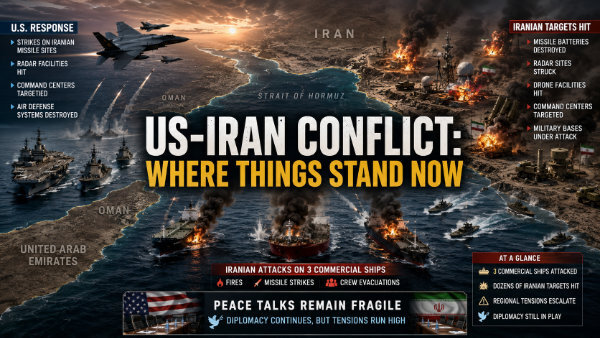
On July 6–7, Iran attacked three commercial ships transiting the Strait of Hormuz. The United States responded with strikes on more than 80 targets in Iran early Wednesday, followed by a second wave of strikes to, in the words of US Central Command, "further degrade Iran's ability to threaten freedom of navigation" in the strait.
This marks the third time the US has launched major strikes on Iran while peace talks were still active — a pattern Tehran says has eroded any remaining trust between the two sides.
Trump Declares the Ceasefire "Over"
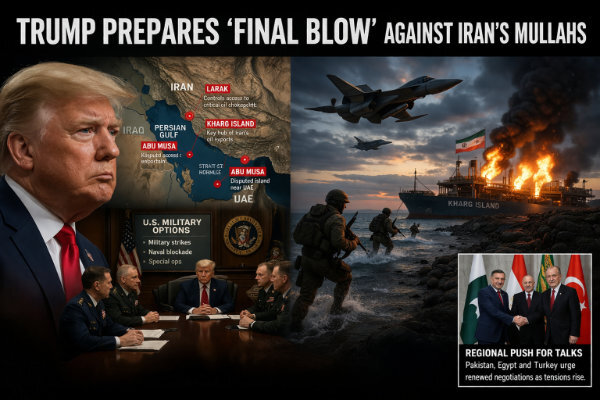
Speaking at the NATO summit in Ankara, President Trump declared the ceasefire finished and said the US might carry out further attacks, while confirming that Washington was reimposing its naval blockade. He described the June memorandum as "over," dismissed continued negotiations as "a waste of time," and referred to Iran's leadership in harsh terms.
Trump also said he was no longer certain he wanted to reach a deal with Tehran at all. At the same time, he suggested the current exchange of fire wouldn't necessarily escalate into a prolonged new war — a sign that even his own position remains unsettled.
Iran's Response
Iran's Revolutionary Guard Corps said it retaliated by targeting US assets in neighboring countries, triggering air raid sirens in Bahrain and Kuwait. The escalation is unfolding against the backdrop of Khamenei's multi-day funeral procession, adding a layer of domestic political sensitivity inside Iran at a fragile moment for the regime.
Economic Fallout
The US Treasury reimposed oil sanctions on Iran effective July 7, ending a waiver that had allowed Tehran to sell crude oil during the negotiation period. Markets reacted quickly: Brent crude rose 6%, to $78 a barrel, and European stocks fell 1.6% following Trump's remarks.
The Bigger Picture
The ceasefire framework isn't formally dead, but it is on life support. Real fighting has resumed — strikes, ship attacks, missile exchanges — talks haven't been officially canceled but have been publicly dismissed by Trump, and sanctions are back in force.
This is consistent with the pattern that has defined the conflict since April: ceasefire, breakdown, brief re-escalation, renewed talks. Whether this latest flare-up is another turn in that cycle or the actual collapse of the deal remains unclear, even to those close to the negotiations.
 News Staff
 -
-
US-Military
Strait of Hormuz
US-Iran conflict
fragile
on-and-off ceasefire
-
396 views -
0 Comments -
0 Likes -
0 Reviews
-
-
US-Military
Strait of Hormuz
US-Iran conflict
fragile
on-and-off ceasefire
-
396 views -
0 Comments -
0 Likes -
0 Reviews




 Loading ...


