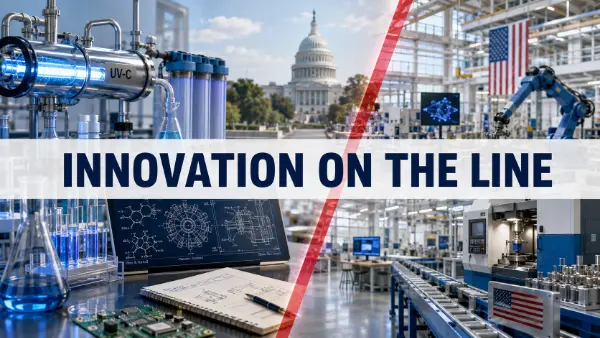
This Federal Proposal Would Put the Brakes on American Innovation
Guest Commentary by Jennifer Pagán, op-ed
Innovation and entrepreneurship are essential to the U.S. economy. And thanks to the launch of innovation hubs across America, university research and businesses are soaring. But a proposal from Secretary of Commerce Howard Lutnick threatens to derail that progress.
Lutnick claims that taxpayers receive "zero" return on the federal money invested in university discoveries that become commercial products. His solution? Seize half the royalty profit from any product resulting from government-backed research.
It's a bold proposal that sounds reasonable at face value. However, taxpayers and Washington already receive benefits from government-backed research in the form of new job and business creation.
What the proposal fails to understand is that the current process by which academic research is translated into real-world products didn't take shape by accident. It was carefully designed by lawmakers under the Bayh-Dole Act of 1980 to promote innovation, drive economic prosperity, and reward inventors. And by any measure, it has worked far better than expected.
Before the Bayh-Dole Act took effect, inventions that benefited from tax dollars belonged to the federal government. As a result, few were ever translated into practical technologies, cures, and other life-enhancing products.
Bayh-Dole changed that -- allowing universities, federal labs, and small businesses to own the patents from their inventions. Crucially, it also allowed them to license these patents to private partners who could turn these inventions into products.
That single reform created a process for turning basic research into a dependable pipeline of products, jobs, and start-ups.
My own company is a prime example.
Through Bayh-Dole, I licensed my technology from UNC Charlotte and helped launch AquiSense to develop and commercialize our mercury-free UV-C LED water disinfection systems. We have invested over 50 times more than the federal government's funding to commercialize our products.
Ten years in, we employ dozens of U.S. workers and ship our American-made equipment worldwide. Today, AquiSense is acknowledged as the global leader in LED based water treatment systems.
My story isn't unique. America's research ecosystem continues to launch university-born startups and attract substantial private investment.
But the benefits from Bayh-Dole aren't merely economic. The law has also led to countless new products and technologies that have changed our way of life for the better. These include everything from blood tests to detect brain injuries to semiconductor manufacturing technology.
This is what real return on taxpayer investment looks like. Seizing half of any royalty profits from these ventures would simply destroy the system of incentives that has made successful products like these -- and the jobs and prosperity they promise to create -- possible.
American taxpayers already have a winning playbook: fund pathbreaking research, let universities partner with ambitious entrepreneurs, and watch as innovative ideas lead to jobs, growth, and healthier communities.
Jennifer Pagán is the Co-Founder and Chief Technology Officer at AquiSense, Inc.
Editor’s note: This article is an opinion piece. Jennifer Pagán is co-founder and chief technology officer of AquiSense Inc., which commercialized federally supported research under the Bayh-Dole framework. She received the Bayh-Dole Coalition’s 2025 American Innovator Award. The views expressed are the author’s own and do not necessarily reflect those of Desert Local News.
 News Staff
 -
-
Business
Secretary of Commerce Howard Lutnick
Jennifer Pagán
innovation
Bayh-Dole Act
-
57 views -
0 Comments -
0 Likes -
0 Reviews
-
-
Business
Secretary of Commerce Howard Lutnick
Jennifer Pagán
innovation
Bayh-Dole Act
-
57 views -
0 Comments -
0 Likes -
0 Reviews