Ripened on Cue
That bunch of bright-yellow bananas at the supermarket may have arrived at the warehouse looking hard and completely green. The transformation is real, but it is not the overnight chemical makeover sometimes portrayed online.
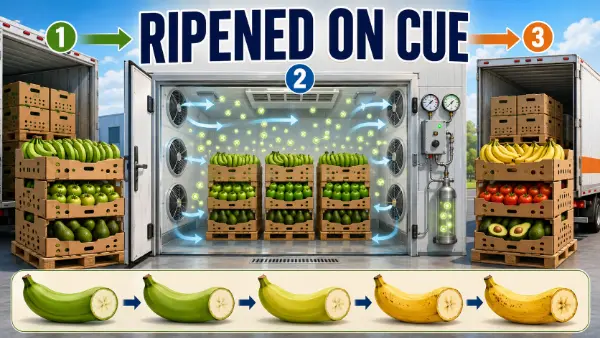
Bananas, tomatoes, avocados and several other fruits naturally produce ethylene, a plant hormone that regulates ripening. Commercial produce companies use carefully measured ethylene gas to begin or synchronize that same biological process before fruit is delivered to stores.
The fruit is not harvested completely immature. It must be physiologically mature—developed enough to ripen properly—but still green and firm. This allows it to withstand shipping and handling with less bruising, decay and waste. A genuinely immature banana may remain green and hard even after prolonged ethylene exposure.
At regional facilities, pallets of mature-green bananas may be placed inside temperature- and humidity-controlled ripening rooms. These are not “pressure chambers,” and they are not simply airtight vaults. Proper air circulation is critical because accumulating carbon dioxide can interfere with ethylene’s action.
Commercial bananas are commonly exposed to 100 to 150 parts per million of ethylene for 24 to 48 hours at temperatures between 59 and 68 degrees. The treatment initiates uniform ripening, but it usually does not turn an entire shipment bright yellow overnight. Full color, sweetness and softness generally develop over the next several days.
Conditions also vary by fruit. Mature-green tomatoes may receive approximately 100 ppm of ethylene for 24 to 72 hours, while avocados can be treated for 12 to 48 hours. Treated avocados usually require another three to six days to become ready to eat.
Inside the fruit, ethylene activates a complex natural process. Chlorophyll breaks down, new pigments appear, cell walls soften and characteristic aromas develop. In bananas, stored starch is converted into sugar, explaining why a green banana tastes chalky while a ripe one tastes sweet.
But what about a supermarket tomato that is beautifully red yet firm, watery and disappointing?
Ethylene alone is not necessarily responsible. Flavor and texture can also be affected by the tomato variety, how mature it was when harvested, growing conditions, extended storage and refrigeration. USDA research has found that chilling can sharply reduce the aroma compounds responsible for much of a tomato’s flavor.
Commercial ethylene ripening is neither a nutritional trick nor evidence of dangerous chemical treatment. It is a controlled use of a hormone fruit already produces naturally—helping suppliers deliver ripe produce on schedule while reducing damage and waste.
 News Staff
 -
-
Health
Supermarkets
Bananas
tomatoes
avocados
fruits
ethylene
-
354 views -
0 Comments -
0 Likes -
0 Reviews
-
-
Health
Supermarkets
Bananas
tomatoes
avocados
fruits
ethylene
-
354 views -
0 Comments -
0 Likes -
0 Reviews






 Loading ...


