Nvidia Faces Fallout From Huang Affair
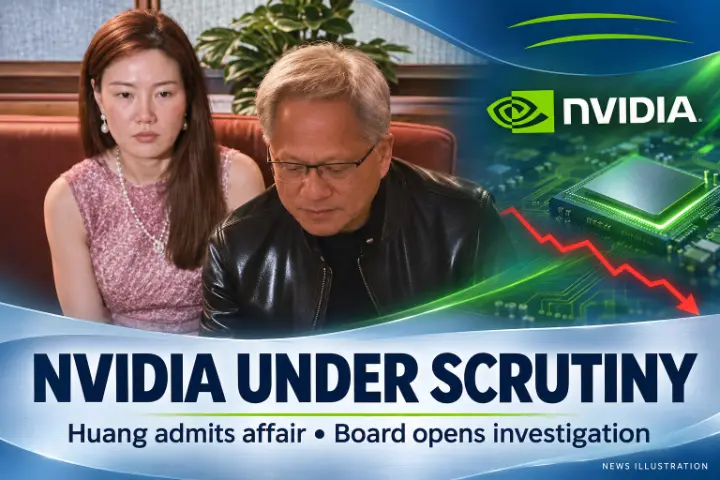
SANTA CLARA, Calif., Nov. 9, 2026 — Jensen Huang’s message to Nvidia employees began with an apology to his family. It arrived alongside a corporate announcement with consequences far beyond his household: an independent investigation into whether the leader of the artificial intelligence chip giant had been targeted by foreign intelligence.
“I was unfaithful to my wife,” Huang wrote in the Nov. 8 email, which Nvidia published. “There is no excuse for what I did. I am deeply sorry.” He acknowledged hurting his wife and children, accepted responsibility and promised to cooperate with the investigation.
The admission followed reports linking Huang to Alice Huang, an unrelated Chinese businesswoman formerly associated with Singapore-based computing company Megaspeed. The New York Times and Financial Times reported that U.S. intelligence officials believed she had been recruited by China’s Ministry of State Security. Those allegations have brought together questions about personal judgment, corporate security and access to some of America’s most closely guarded technology.
Huang’s published apology did not name Alice Huang or describe the relationship’s duration. It also did not admit that confidential information had been disclosed. He told employees, directors, business partners and shareholders that he had fallen short of his responsibilities and would work to restore their confidence.
Nvidia’s board said a committee of independent directors, assisted by outside independent lawyers, would oversee the inquiry. It expressed confidence in Huang and his leadership team, leaving him in charge while investigators examine the available information. The board also said it currently had no reason to believe national security or Nvidia’s secrets had been compromised. That position is preliminary, rather than a completed investigation’s finding.
Investors nevertheless reacted sharply. Reuters reported that Nvidia shares fell more than 6% in Frankfurt trading Monday, extending the previous week’s selloff. These were European trading figures before the regular U.S. session, rather than a final Monday closing result.
The distinction matters when assessing claims that the affair “cost Nvidia 19%.” A decline measured over a month includes trading before Sunday’s admission. It cannot accurately be presented as a loss caused entirely by the confession. The developing controversy has added another concern to a stock already under pressure during a broader retreat in AI shares.
Megaspeed’s business dealings form another part of the scrutiny. The company supplies computing capacity used to train and operate AI systems and has faced investigation over suspected efforts to circumvent U.S. restrictions on advanced chips reaching China. Those suspicions should not be confused with a publicly established finding that Nvidia knowingly participated in smuggling.
In an October interview with Bloomberg, Huang defended Nvidia’s dealings with Megaspeed and said the company had checked its chip deployments for illegal diversion. His subsequent admission of infidelity has intensified questions about his earlier descriptions of his interactions with Alice Huang.
Congress is seeking answers as well. Republican committee chairmen Brian Mast, John Moolenaar and Rick Crawford requested a joint, closed-door briefing for Nov. 18 covering Huang’s interactions with Alice Huang and Nvidia’s protections against foreign espionage. Their announcement asked him to accept that date or propose an alternative by Nov. 11; it did not announce a subpoena or confirm his attendance.
China rejected the espionage allegations Monday. Alice Huang’s alleged intelligence role remains an accusation attributed to U.S. officials in published reporting.
For shareholders, employees and customers, the central questions now concern what access she had, what information—if any—was exposed, and whether Nvidia’s safeguards worked. Huang has accepted responsibility for betraying his family’s trust. The board’s investigation must determine whether his conduct also put the company or national security at risk.
 News Staff
 -
-
Business
vaccination
Nvidia
Jensen huang
China
foreign espionage
-
85 views -
0 Comments -
0 Likes -
0 Reviews






 Loading ...


