Iran Missiles Shatter Pause
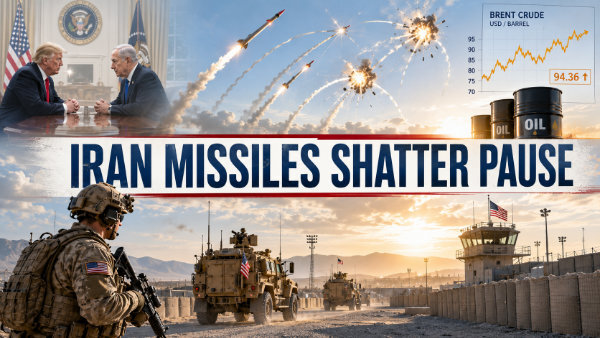
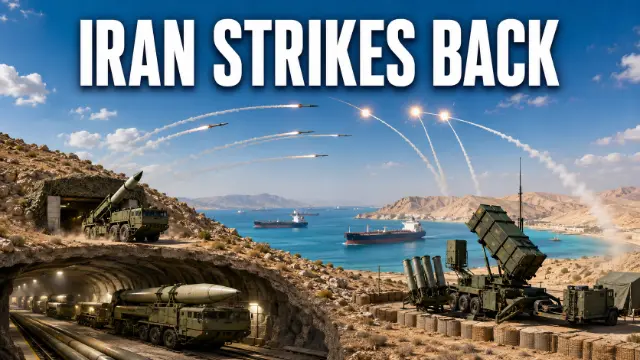
Iran launched several ballistic missiles toward American forces in the Middle East Tuesday night, abruptly ending four nights without direct U.S.-Iran attacks and placing already fragile diplomatic efforts in renewed danger.
U.S. Central Command described the missile launch as an attempted surprise attack carried out by Iran’s Islamic Revolutionary Guard Corps. The missiles were fired at approximately 5:45 p.m. Eastern time Tuesday, or 1:15 a.m. Wednesday in Iran.
CENTCOM said all the missiles were successfully intercepted and that American forces remained vigilant and at a high state of readiness. No deaths, injuries or significant damage were immediately reported, and Tehran had not publicly explained the attack during the first hours after the announcement.
The strike ended a four-day pause that followed 13 consecutive nights of expanding U.S. airstrikes against Iranian military targets. The quiet period was not a formally negotiated ceasefire. Instead, it represented an informal halt in direct attacks while mediators attempted to bring Washington and Tehran back toward negotiations.
The timing was particularly significant.
Iran’s missiles were launched only hours after President Donald Trump met Israeli Prime Minister Benjamin Netanyahu at the White House. It was their first face-to-face meeting since the United States and Israel began their joint military campaign against Iran on Feb. 28.
The closed-door Oval Office meeting lasted approximately 90 minutes and was described by the White House as positive and productive. Netanyahu later said the two leaders remained united in their goal of preventing Iran from obtaining a nuclear weapon.
However, the meeting also came amid reported differences over how long the conflict should continue and whether additional military operations could undermine efforts to reach a diplomatic agreement.
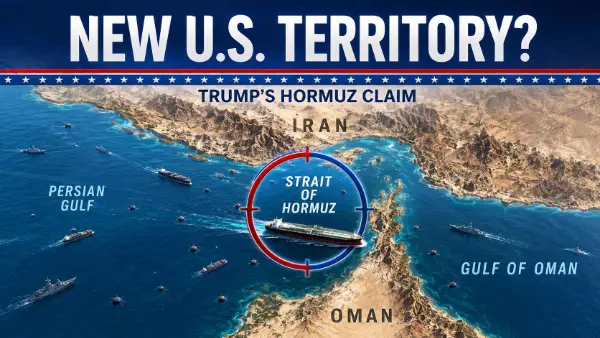
Trump had recently spoken optimistically about possible progress with Tehran while warning that American bombing could resume if negotiations failed. Iran has disputed claims that it is holding direct talks with Washington, although Iranian officials have acknowledged discussions with Oman concerning regional security and shipping through the Strait of Hormuz.
The renewed missile fire also threatens to bring more volatility to global energy markets.
Before the Iranian attack was announced, oil prices had fallen sharply as traders responded to the pause in fighting and the possibility that Washington would avoid another immediate escalation. Brent crude settled Tuesday at $84.09 per barrel, down 4.8%, while West Texas Intermediate fell 4.1% to $79.26. Brent had dropped approximately 16% over three trading sessions.
The missile launch renewed concerns that hostilities could again disrupt shipping through the Strait of Hormuz, which normally handles about one-fifth of the world’s oil supply. Any confirmed U.S. retaliation could restore part of the geopolitical risk premium that disappeared from oil prices during the brief pause.
The attack does not necessarily close every diplomatic channel, but it leaves Trump facing a difficult decision: treat the intercepted missiles as a failed strike that caused no casualties or respond militarily and risk restarting the cycle of attacks.
For now, the missiles were stopped. The larger confrontation was not.
 News Staff
 -
-
World at War
Iran launched missiles
surprise attack
-
359 views -
0 Comments -
0 Likes -
0 Reviews
-
-
World at War
Iran launched missiles
surprise attack
-
359 views -
0 Comments -
0 Likes -
0 Reviews




 Loading ...


