Hormuz Deal Nears
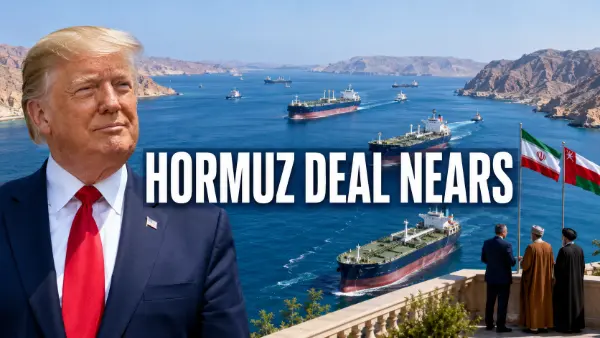
WASHINGTON — Iran and Oman have reached a preliminary understanding on a plan that could reopen the Strait of Hormuz, offering cautious hope that one of the world’s most important energy routes may soon return to normal operation.
The development is significant, but it is not yet a final agreement. Iran’s Foreign Ministry said the two countries had agreed on the geographic coordinates of a proposed shipping corridor and were preparing a joint announcement. Important security, inspection and payment provisions remain under discussion.
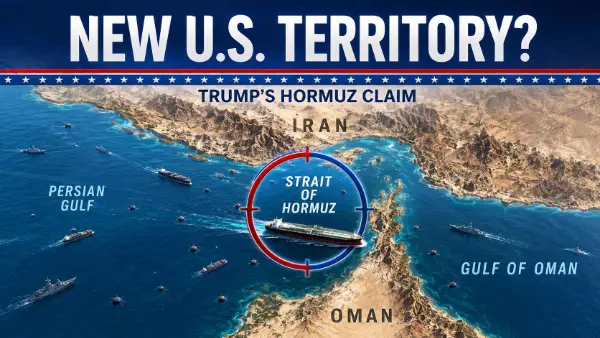
Under the reported plan, ships entering the Persian Gulf would travel through waters monitored by Iran, while departing vessels would follow a route closer to Oman. One draft would prevent Tehran from imposing a mandatory toll but permit voluntary payments for navigation assistance, security, and search-and-rescue services.
Other accounts indicate that Iran has sought much larger fees and greater authority over incoming ships. That disagreement is important because Washington has repeatedly said it will not accept Iranian control over international navigation through the strait.
President Donald Trump responded with optimism, telling reporters that an agreement “could happen” within a day or two.
“A lot of progress has been made,” Trump said when asked about reports that an announcement was imminent. His comments were more confident than those from regional negotiators, who cautioned that the arrangement remained in its final drafting and review stages.
Trump recently canceled a planned attack on Iran to allow more time for diplomacy. He has said any broader agreement must include the complete reopening of the strait and measures addressing Iran’s nuclear program. Tehran, however, says its current negotiations are with Oman—not directly with Washington.
Iran has also attached conditions to reopening the route. The most consequential could be a demand that the United States end its naval blockade of Iranian ports. That blockade restricts Iranian oil exports and places considerable pressure on Tehran’s already weakened economy.
Approval within Iran presents another obstacle. President Masoud Pezeshkian acknowledged that communication with Supreme Leader Mojtaba Khamenei, who has remained out of public view, is currently “very difficult.” Elements of the Islamic Revolutionary Guard Corps could also resist an arrangement they believe limits Iran’s authority over the waterway.
One reported compromise would establish the new system for an initial 60-day trial period. That would allow commercial traffic to resume while the United States, Iran, Oman and regional governments continue negotiating the more contentious questions of maritime control, sanctions, port access and Iran’s nuclear activities.
The Strait of Hormuz has been severely disrupted since the war began in late February. Before the conflict, roughly 20 million barrels of oil and petroleum products passed through it each day—about one-fifth of global petroleum consumption. Approximately one-fifth of worldwide liquefied natural gas trade also used the route.
Energy markets are already reacting to the possibility of an agreement. Brent crude traded near $80 a barrel on Wednesday, well below levels reached during the conflict’s most dangerous periods. A dependable reopening could reduce shipping costs and eventually ease pressure on gasoline and electricity prices, although relief at the pump would not necessarily be immediate.
For Trump, an agreement could bring welcome economic and political relief ahead of the November midterm elections. But the central fact remains unchanged: Iran and Oman have made measurable progress toward a shipping arrangement, while the larger diplomatic deal needed to keep the Strait of Hormuz open has yet to be completed.
 News Staff
 -
-
World at War
Strait of Hormuz
Iran and Oman
Masoud Pezeshkian
-
388 views -
0 Comments -
0 Likes -
0 Reviews
-
-
World at War
Strait of Hormuz
Iran and Oman
Masoud Pezeshkian
-
388 views -
0 Comments -
0 Likes -
0 Reviews




 Loading ...


