 News Staff
 -
7 hours ago -
United States and its G7 partners
Diesel
Crude oil reserve
-
60 views -
0 Comments -
0 Likes -
0 Reviews
-
7 hours ago -
United States and its G7 partners
Diesel
Crude oil reserve
-
60 views -
0 Comments -
0 Likes -
0 Reviews
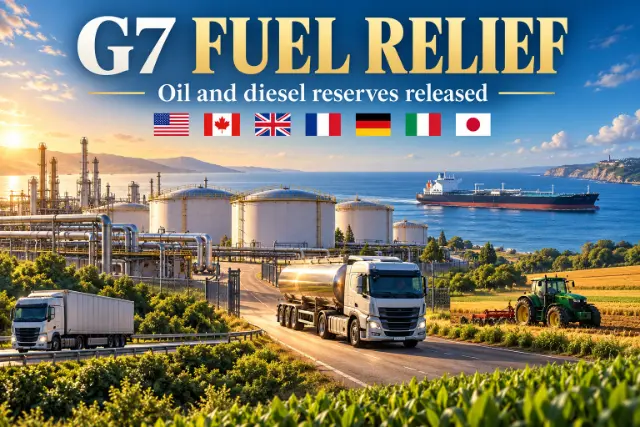
G7 Unites for Fuel Relief
For farmers filling tractors and trucking companies watching fuel bills climb, an agreement between the United States and its G7 partners offers a welcome prospect: more diesel reaching the market and less pressure on operating costs.
G7 leaders agreed Friday, Oct. 2, to coordinate the release of 100 million barrels of crude oil and refined fuels through the International Energy Agency. The program will begin immediately and run for four months, with substantial diesel volumes scheduled for release within the first 20 days.
French President Emmanuel Macron chaired the virtual meeting, bringing Washington and its partners together around a shared economic concern.
“This common decision and this unity should bring down prices,” Macron said.
President Donald Trump welcomed Europe's contribution. His administration had pressed European governments to accelerate reserve releases as businesses and households struggled with higher fuel bills.
The agreement also carries a diplomatic benefit: G7 members reaffirmed that they would avoid restricting energy exports to one another. That commitment could help rebuild confidence between the United States and Europe by preserving dependable commercial relationships during a supply crisis.
For businesses, the potential benefits extend beyond the filling station. Diesel powers freight transportation, agricultural equipment and construction machinery. Lower costs could ease pressure on delivery charges, food distribution and project budgets, although savings would take time to reach customers.
Leaders also agreed to coordinate refinery maintenance and increase refinery utilization where feasible. They encouraged other countries with substantial refining capacity to increase production, particularly diesel.
The initiative comes as war damage and disrupted export routes have constrained Persian Gulf fuel shipments. Russian export restrictions have added pressure to international diesel supplies.
Relief remains uncertain. Emergency stocks provide temporary support, and prices will also depend on shipping security, refinery output and continuing conflict. The statement links the release to commitments made in March; it should not be described as an entirely additional allocation.

Queue

Desert Local News delivers sharp, fact-checked coverage from the Coachella Valley to the world — local stories, business, entertainment, opinion, global headlines, and the unexpected moments that keep things interesting.

 Loading ...
