DLN-Health:
Food Outbreaks Raise Alarm
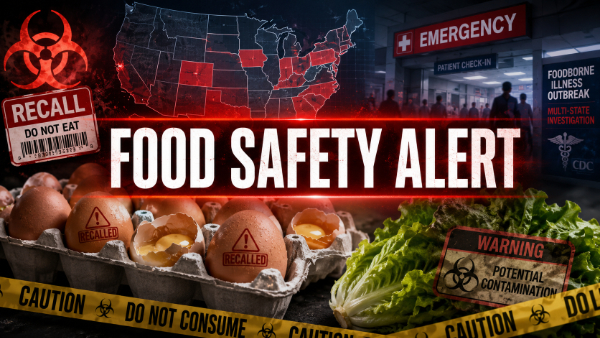
Federal and state health agencies are responding to two major foodborne illness investigations as a nationwide egg recall and a growing cyclosporiasis outbreak raise new concerns about the safety of the nation’s food supply.
Midwest Poultry Services has recalled 1,589,577 dozen eggs—more than 19 million individual eggs—because of possible contamination with Salmonella Enteritidis. The recall includes both white shell eggs and brown cage-free eggs sold under several brand names, including Kroger, Simple Truth, Brookshire’s, Country Morning and Cal-Maine Sunups.
Federal health officials reported that 98 people in 17 states had been infected with the outbreak strain as of July 24. Twenty-six patients were hospitalized, but no deaths were reported. Investigators said laboratory testing, interviews with patients and product-tracing evidence identified the recalled eggs as a likely source of illness.
The affected eggs carry sell-by or best-by dates ranging from July 20 through Aug. 17, 2026. They may also be identified by plant codes P-1950 or 0840962 and Julian dates between 157 and 184. Confirmed distribution includes Arkansas, Louisiana, Mississippi, New Mexico, Oklahoma and Texas, although officials warned that some products may have been redistributed to other states or used by restaurants and food-service businesses.
Consumers who have the recalled eggs are advised not to eat them. The products should be discarded or returned to the place of purchase. Refrigerators, containers, countertops and utensils that may have come into contact with the eggs should also be washed and sanitized.
Salmonella infections can cause diarrhea, fever, stomach cramps, nausea and vomiting. Symptoms often begin within several hours or days after exposure. Most people recover without treatment, but serious illness can occur, particularly among older adults, young children and people with weakened immune systems.
At the same time, public health officials are investigating a significant increase in cyclosporiasis, an intestinal illness caused by the microscopic Cyclospora parasite. Since May 1, health agencies have received reports of more than 4,100 laboratory-confirmed domestic cases across 41 states, including more than 300 hospitalizations. Thousands of additional suspected cases remain under review.
One major cluster involving nearly 2,000 illnesses in nine states has been linked through epidemiological and tracing evidence to iceberg lettuce sourced from central Mexico and recalled by Taylor Farms de Mexico. The lettuce was distributed to restaurants, food-service operations and selected Walmart stores under the Marketside brand.
Cyclospora infections are commonly associated with contaminated fresh produce. Symptoms may include frequent watery diarrhea, loss of appetite, weight loss, stomach cramps, bloating, nausea and fatigue. Without treatment, symptoms can continue for weeks or return after appearing to improve.
The simultaneous investigations highlight the complicated work required to detect and contain foodborne illness outbreaks. Federal agencies, state and local health departments, laboratories, physicians, retailers, farms and food processors must often coordinate across multiple jurisdictions while attempting to trace products moving through national supply chains.
Food safety experts say rapid reporting and strong surveillance systems are essential, especially when contaminated food is distributed across several states. Public health agencies must identify patterns, interview patients, analyze laboratory samples and track products back through distributors and producers before the source can be confirmed.
Consumers can reduce their risk by following recall announcements, washing hands before preparing food, separating raw ingredients from ready-to-eat foods and cooking eggs thoroughly. Fruits and vegetables should be rinsed under clean running water, although washing cannot guarantee that parasites such as Cyclospora will be completely removed.
Anyone experiencing persistent diarrhea, high fever, severe stomach pain, bloody stool or signs of dehydration should contact a healthcare provider. People should also tell their doctor about foods they recently consumed, especially eggs, lettuce and other fresh produce, because that information can help public health investigators identify possible connections between cases.
 News Staff
 -
-
Health
Eggs
Salmonella Enteritidis
white shell eggs and brown cage-free eggs
Cyclospora
-
445 views -
0 Comments -
0 Likes -
0 Reviews
-
-
Health
Eggs
Salmonella Enteritidis
white shell eggs and brown cage-free eggs
Cyclospora
-
445 views -
0 Comments -
0 Likes -
0 Reviews





 Loading ...


