DLNews Staff
FINAL MOVE OR HIGH-STAKES BLUFF? TRUMP’S IRAN STRATEGY RAISES GLOBAL TENSIONS
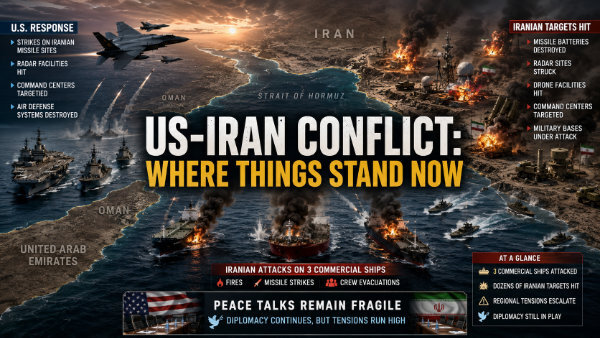
Tehran/Washington — As diplomatic efforts stall and tensions deepen in the Persian Gulf, new reports suggest President Trump’s administration is weighing a far more aggressive phase in the ongoing Iran conflict—one that could redefine both military strategy and geopolitical risk.
According to multiple reports, including from Axios, U.S. officials have discussed options that go beyond air and naval pressure, including the potential deployment of limited ground forces targeting strategic Iranian positions. While no final decision has been publicly confirmed, the conversations reflect a notable escalation in tone and planning.
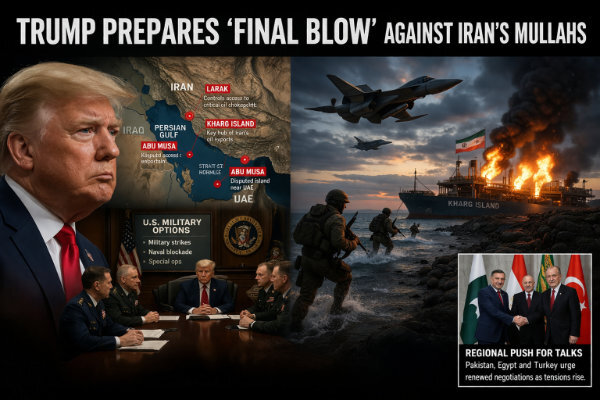
At the center of the discussion are key Iranian-controlled islands in the Persian Gulf—most notably Kharg Island, a critical hub for Iran’s oil exports. Analysts widely view the island as essential to Iran’s economy, handling a significant portion of its crude shipments. Any disruption there could dramatically impact Iran’s revenue stream, but would also risk destabilizing global energy markets.
Other strategic points reportedly under review include Larak Island, near the Strait of Hormuz—a vital chokepoint for global oil transit—and Abu Musa, a disputed island near the United Arab Emirates. Each location carries both military value and considerable political sensitivity.
Behind the scenes, regional powers including Pakistan, Egypt, and Turkey have attempted to revive negotiations between Washington and Tehran. However, recent rhetoric suggests those efforts are faltering. President Trump has publicly warned that failure to engage seriously in negotiations could lead to consequences that would be, in his words, “ugly.”
Military planners are also said to be weighing alternatives to a direct assault. These include naval blockades, interception of Iranian oil shipments, and targeted operations tied to Iran’s nuclear infrastructure. Such moves could apply economic pressure without immediately committing to a full-scale ground conflict.
Still, the risks are substantial. Any attempt to restrict Iranian oil exports could provoke broader international complications, particularly with countries like China, which remain major buyers of Iranian crude. Domestically, the prospect of deploying U.S. ground troops remains controversial, with public opinion historically cautious about deeper military involvement in the region.
For now, what emerges is a strategy built on leverage—using the possibility of decisive force to push negotiations forward. Whether it becomes a turning point toward resolution or a trigger for wider conflict remains uncertain.
In a region where every move carries global consequences, the next step may prove decisive—not just for Iran and the United States, but for markets, allies, and stability far beyond the Gulf.
 News Staff
 -
-
US-Military
iran-us-war
Final offer
-
1.5K views -
0 Comments -
0 Likes -
0 Reviews
-
-
US-Military
iran-us-war
Final offer
-
1.5K views -
0 Comments -
0 Likes -
0 Reviews



 Loading ...


