Extreme Heat Tests Coachella Valley
COACHELLA — The Coachella Valley is facing another dangerous stretch of summer heat, with temperatures expected to soar well above 110 degrees in parts of the desert this week.
The National Weather Service has issued an Extreme Heat Warning for the region, warning that the combination of blistering afternoons and warm overnight lows can quickly become dangerous, especially for seniors, outdoor workers, children, people without reliable air conditioning and residents with health conditions.
For Coachella and surrounding desert communities, the warning is familiar but no less serious. Extreme heat can strain the body, increase the risk of heat exhaustion and heat stroke, and put added pressure on local cooling centers, emergency responders and the power grid.
Public health officials continue to urge residents to drink water often, avoid strenuous outdoor activity during the hottest part of the day, check on vulnerable neighbors and never leave children or pets inside parked vehicles.
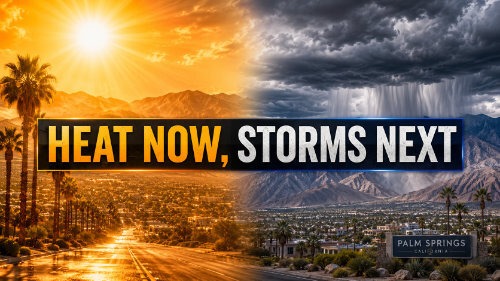
But the heat may be only part of a larger weather story. Federal and international climate forecasters are watching a strengthening El Niño pattern in the Pacific Ocean, a climate event that can influence weather around the globe. While El Niño does not guarantee heavy rain in any one city, strong El Niño winters have historically increased the chances of wetter conditions across Southern California.
That possibility matters in the Coachella Valley, where extreme summer heat can be followed months later by winter storms that test drainage systems, roads, hillsides, mobile home communities and older infrastructure. Recent atmospheric river storms in Southern California showed how quickly flooding, mudflows and road closures can disrupt daily life.
The lesson for local communities is preparation. Homeowners can check roofs, gutters, drainage areas, retaining walls and slopes before winter storms arrive. Cities and agencies can focus on cooling access, flood planning, road maintenance and clear public communication.
For desert residents, resilience is becoming more than an emergency management term. It means preparing for heat now, planning for storms later and recognizing that extreme weather is no longer rare.
In the Coachella Valley, the forecast is no longer just about today’s temperature. It is about how well communities are ready for what comes next.
 News Staff
 -
-
Health
Coachella Valley
El Niño
Extreme Heat Warning
-
442 views -
0 Comments -
0 Likes -
0 Reviews
-
-
Health
Coachella Valley
El Niño
Extreme Heat Warning
-
442 views -
0 Comments -
0 Likes -
0 Reviews






 Loading ...


