China Opens Door to Trump–Xi–Putin Summit
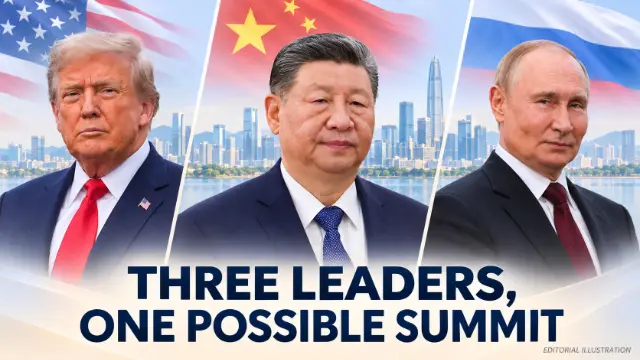
Three presidents, one table—and competing ideas about what belongs on the agenda. China has confirmed discussions about bringing Donald Trump, Xi Jinping and Vladimir Putin together this month, although the proposed meeting remains unconfirmed.
“China is in communication with relevant parties regarding a meeting between the three heads of state,” Foreign Ministry spokesperson Mao Ning said at a November 4 briefing. Her statement confirmed diplomatic contacts, without announcing an agreement, agenda or date.
The potential setting is Shenzhen, the southern Chinese city hosting the Asia-Pacific Economic Cooperation leaders’ meeting November 18–19. A gathering on its sidelines would place the American, Chinese and Russian presidents together for their first three-way summit.
But getting everyone into the same room would leave harder questions unresolved.
Trump has expressed interest in discussing nuclear arms controls. Putin’s priority is the war in Ukraine, with Kyiv absent from the proposed talks. Stimson Center China specialist Sun Yun told The Associated Press that Beijing sees value in hosting, but also risks: “China wants the image but not the costs.”
Former senior U.S. diplomat Danny Russel told AP that Putin stood to gain the most diplomatically from such a gathering.
For Ukraine, the concern reaches beyond appearances. President Volodymyr Zelenskyy warned last month against a meeting that could redistribute international influence in the manner of the 1945 Yalta conference. His objection underscores a fundamental question: What might powerful governments discuss about countries whose leaders are not invited?
Meanwhile, Washington and Beijing still have unfinished economic business. On November 6, U.S. Trade Representative Jamieson Greer and Treasury Secretary Scott Bessent spoke with Chinese Vice Premier He Lifeng. Greer pressed China to fulfill commitments involving agricultural purchases, rare earths and other critical minerals—issues with consequences for American farmers, manufacturers and workers.
Those practical stakes give readers reason to watch beyond the handshakes. A photograph could demonstrate access and influence; meaningful progress would require commitments the governments actually carry out.
For now, China has confirmed that discussions are underway. Whether those discussions produce a summit—and whether that summit produces anything more—remains open.
 News Staff
 -
-
Politics
Donald Trump
Xi Jinping and Vladimir Putin
Shenzhen
Trump–Xi–Putin Summit
-
70 views -
0 Comments -
0 Likes -
0 Reviews



 Loading ...


