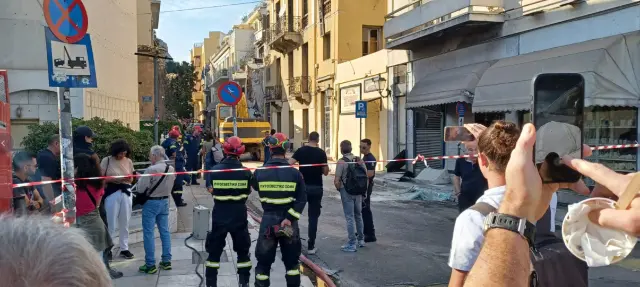
Image: Street scene near the explosion in Athens on Sept. 25. Photo: Anthony Grant
Airbnb: The Vacation Rental That Comes Without a Safety Warning
Anthony Grant
ATHENS — This teeming city was literally shaken on Friday morning, September 25, but not by an earthquake—though it is prone to them.
I was here when the explosion ripped through a building on Lysikratous Street in the Greek capital's historic Plaka district. I heard it and witnessed the enormous plumes of smoke from several blocks away. In one of the most heavily visited parts of Athens, a building had been utterly devastated.
The explosion and subsequent building collapse left six people dead. Four of them were Americans visiting Greece—two newlyweds who had married only weeks earlier, alongside the bride’s brother and his pregnant wife. The other two victims were an elderly British man and his Greek wife, who resided on the upper floor.
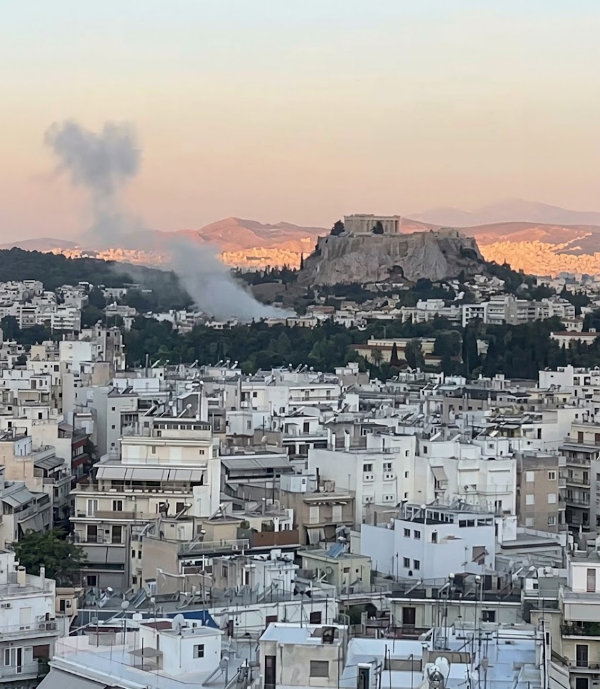
Smoke rises over Athens after a building explosion on Sept. 25. Photo: Anthony Grant
There is another detail that should not be lost amid the horror of what happened: the four Americans were staying in an Airbnb.
They had booked an apartment in the building through the short-term rental platform. They were supposed to fly home that afternoon. They had already checked in online for their flight. They never made it to the airport.
What Travelers Actually Know
Investigators suspect a gas leak within an upper-floor apartment, though the cause has not been conclusively established. Authorities have ruled out a leak in the neighborhood's main gas pipeline, and the investigation continues.
Gas leaks can happen just about anywhere. Old buildings contain old infrastructure, and catastrophic accidents can occur without anyone deliberately doing anything wrong. It is entirely possible that nothing about this particular listing could have altered the outcome.
But that does not make the larger question disappear: What does Airbnb actually tell its customers about the physical safety of the buildings in which they bed down?
When you book a hotel, you are staying in a property governed by an established commercial operation subject to the explicit municipal and fire regulations of the host country. That does not render a hotel immune from disaster, but it does provide a traveler with a reasonable, legally enforced baseline of safety oversight.
With Airbnb, the equation is far less obvious. A traveler can book a charming apartment in a historic neighborhood in Athens, New York, or Paris, but what does the guest actually know about the building's infrastructure, fire suppression, or inspection history?
The honest answer is: almost nothing.
The Case for Transparency
I am not suggesting that Airbnb should independently inspect every structure on the globe. The point is far simpler: when a global corporation generates billions of dollars facilitating stays in private residential properties, it owes its customers complete transparency about what it does not know. Perhaps Airbnb needs a warning label of its own.
Cigarette packages carry warnings because consumers ought to understand the inherent risks of a product. Airbnb does not need to tell customers that staying in one of its properties is likely to kill them—because it plainly isn't. But it could be more forthcoming about the limitations of its knowledge regarding local inspection protocols, aging building infrastructure, and varying safety regulations across the country and around the world.
That baseline honesty would at least allow travelers to make an informed choice. Instead, there is only a troubling, deafening silence: Airbnb has yet to issue a public statement about the deaths in Plaka and their press office has been non-responsive.
There has been no public expression of sympathy from the company for the six people killed, nor any public acknowledgment that four of the victims were customers who booked their stay through the Airbnb platform. While private outreach to the families may exist behind closed doors, publicly, the company has chosen total radio silence.
That is extraordinary.
Airbnb does not have to accept legal liability to express condolences. But the corporate strategy appears to be that saying nothing is preferable to drawing attention to the risk. This silence is particularly repugnant because Airbnb monetized these tourists' vacation accommodations. Four of those customers are now dead.
Perhaps the ultimate takeaway for travelers is to choose the tried and true: book the hotel with a front desk, visible regulatory obligations, and an established management structure whose physical premises are its core business. It may cost more. It may lack the perceived allure of living like a local. But at least you know what you are buying.
The four Americans who died in Athens were not looking for danger; they were celebrating a honeymoon in Athens. Days after the capital was rocked by an explosion that claimed six lives, the company that took their money has not publicly offered so much as a word of sorrow. That silence does not prove Airbnb is responsible for the blast. It does, however, tell us everything we need to know about the company—and more troublingly, about the Silicon Valley culture that built it.
Anthony edits the Greek Column newsletter.
 News Staff
 -
-
Other
Athens/Greek
Airbnb
Explosion
-
77 views -
0 Comments -
0 Likes -
0 Reviews
-
-
Other
Athens/Greek
Airbnb
Explosion
-
77 views -
0 Comments -
0 Likes -
0 Reviews




 Loading ...


