News Staff December 26, 2025
6.5K views 0 Comments 0 Likes
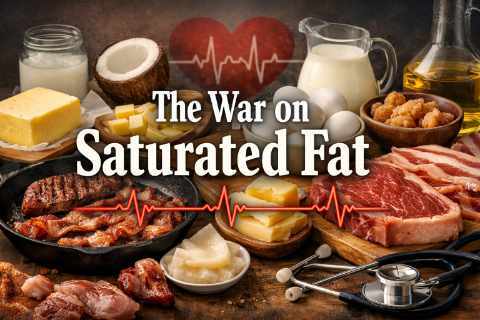
The war on saturated fat was never based on good science
By Nina Teicholz
For over half a century, Americans have been urged to shy away from saturated fats, found mainly in animal products.
Paradoxically, decades of adherence to this advice have coincided with rising levels of chronic disease.
Put plainly: The war on saturated fat -- rooted in the hypothesis that it causes heart disease -- has never been based on sound science.
Fortunately, this long-overdue change now looks likely to happen. Next year, the federal government will release the Dietary Guidelines for Americans -- the nutritional blueprint that shapes everything from school lunches to hospital meals -- and officials have finally signaled that they'll lift the decades-old limit on saturated fat.
The misguided crusade against fat began in the 1950s when researcher Ancel Keys proposed a connection between saturated fat and heart disease.
In subsequent decades, scientists set out to test Keys' hypothesis. They conducted a series of large randomized, controlled clinical trials around the world -- some funded by the National Institutes of Health -- enrolling a total of 67,000 participants. Those on the experimental diets replaced animal fats with vegetable oils made from corn and soy, while the control groups ate the traditional diets of the time -- with up to 18% of calories from saturated fat.
When the results of these "core trials" could not confirm Keys' hypothesis, researchers largely ignored or buried them -- one major study went unpublished for 16 years. Among dozens of review papers on the core trials, not one could point to evidence that lowering saturated fat had an effect on cardiovascular mortality or total mortality.
It's true that saturated fat increases LDL, the "bad" cholesterol associated with heart disease, and participants in the core trials on the experimental vegetable oil diet did successfully lower their cholesterol. Even so, mortality didn't budge, and there was little to no effect on cardiovascular events.
One plausible explanation for why this higher LDL doesn't worsen cardiovascular outcomes is that saturated fat also raises HDL -- the "good" cholesterol that protects the heart -- possibly equalizing the overall effect on heart disease risk.
Saturated fats may even have beneficial effects. The world's largest observational study, following 135,000 people, found that those who ate more saturated fat suffered fewer strokes.
Yet despite this substantial body of evidence, federal nutrition policy remains stuck in the past.
When the Departments of Agriculture and Health and Human Services issued the first Dietary Guidelines in 1980, 15% of adults were obese. Forty-five years later, 40% of American adults are now obese, three-in-four live with at least one major chronic disease, and one-third have prediabetes. Heart disease remains the nation's leading killer.
We got here by replacing the whole, unprocessed foods that our ancestors ate for millennia with processed, refined carbohydrates -- foods strongly linked to obesity, diabetes, and premature death.
The federal limits on fat are long overdue for correction.
Thankfully, momentum is shifting. Policymakers in both parties are calling for a reexamination of the nation's nutrition policies. FDA Commissioner Dr. Marty Makary has repeatedly said the demonization of saturated fat is "medical dogma" that must end.
Continuing to steer Americans away from butter, cheese, and meat ignores decades of evidence. As the next Dietary Guidelines take shape, policymakers have a rare opportunity to correct course and end the unfounded war on saturated fat.
Ms. Teicholz is the founder of the Nutrition Coalition and author of "The Big Fat Surprise." This piece originally ran in The Hill.
Publisher’s Note: This guest commentary originally appeared in The Hill. The views expressed are those of the author and do not necessarily reflect the views of Desert Local News.

Queue

Desert Local News delivers sharp, fact-checked coverage from the Coachella Valley to the world — local stories, business, entertainment, opinion, global headlines, and the unexpected moments that keep things interesting.



Comments