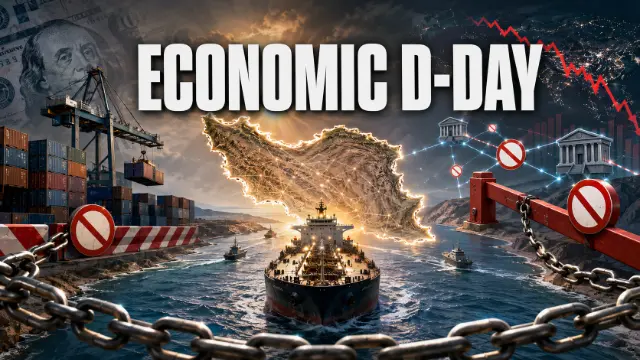
Trump Declares “Economic D-Day”
President Donald Trump has opened a new and potentially far-reaching front in the nearly six-month war with Iran, promising to unleash what he called the “most crushing economic operation ever taken against any country.”
In a Truth Social statement Wednesday, Trump branded the campaign “Economic D-Day” and declared that Iran would face “economic warfare and isolation on an unprecedented scale.” The language was unmistakably severe, but the president initially provided few details about the measures Washington would impose.
That changed somewhat Thursday when Treasury Secretary Scott Bessent promised “the toughest sanctions in history.” He described the plan as a combination of intensified sanctions and the existing U.S. naval blockade, arguing that crushing economic pressure could reduce the need for another major military offensive. Bessent said additional details would be announced Monday.
Trump’s warning extends far beyond Tehran. He threatened “tremendous economic consequences” against any country allowing its banks, businesses, airports or government agencies to provide Iran with an economic lifeline. He specifically pointed to oil smuggling, cash transfers, currency exchanges, shipping registries and front companies used to evade sanctions.
In practical terms, that could mean secondary sanctions against foreign banks, refiners, shipping companies and governments dealing with Iran. Such penalties can cut companies off from the American financial system, freeze assets under U.S. jurisdiction or block access to dollar-denominated transactions.
The greatest test may be China, which purchased more than 80% of Iran’s shipped oil in 2025. Aggressively targeting Chinese banks or energy companies could sharply reduce Tehran’s principal source of export revenue—but it could also provoke retaliation from Beijing and widen the conflict into another global trade confrontation.
For Iran, the pressure will be intense but not entirely new. The country has survived decades of sanctions by using intermediaries, informal financial networks, disguised tankers and discounted oil sales. Whether additional punishment can force Tehran to accept Washington’s terms remains uncertain.
Iranian Foreign Minister Abbas Araghchi dismissed Trump’s announcement as another failed pressure campaign and labeled American sanctions “economic terrorism.” Tehran argues that such measures ultimately punish ordinary people by weakening the currency, increasing inflation and making imported food, medicine and industrial supplies more expensive.
The economic assault also carries risks for the wider world. Oil prices rose following Trump’s announcement, while the Strait of Hormuz—normally carrying about one-fifth of globally traded oil—remains severely disrupted. Tougher enforcement against Iranian exports could tighten energy supplies further, raising fuel and transportation costs from Asia to Europe and the United States.
Two announced ceasefires, in April and June, quickly collapsed, while negotiations over reopening the Strait of Hormuz have failed to produce a lasting settlement. Trump is now betting that financial strangulation can accomplish what months of military action and diplomacy have not.
The rhetoric is historic. Whether the operation proves equally powerful will depend on enforcement, international cooperation—and how much economic pain Washington is prepared to inflict not only on Iran, but on countries that refuse to join its campaign.
 News Staff
 -
-
Breaking News -
Truth Social
iran-us-war
President Donald Trump
“Economic D-Day”
-
316 views -
0 Comments -
0 Likes -
0 Reviews
-
-
Breaking News -
Truth Social
iran-us-war
President Donald Trump
“Economic D-Day”
-
316 views -
0 Comments -
0 Likes -
0 Reviews