JTFMax
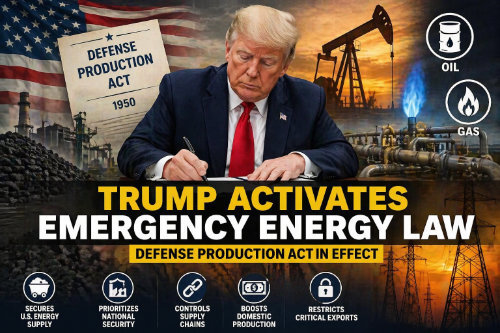
TRUMP ACTIVATES EMERGENCY ENERGY LAW
Washington — With the fragile ceasefire between the United States and Iran set to expire on April 22, President Trump has taken a decisive step that signals Washington is preparing for a prolonged and uncertain conflict. In a move rooted in Cold War-era authority, Trump has activated the Defense Production Act, a powerful federal law designed to mobilize industry in times of national emergency.
Originally enacted in 1950 during the Korean War, the Defense Production Act allows the president to direct private industry to prioritize government needs, expand production capacity, and secure critical supply chains. While the law has been used in more recent years—most notably during the COVID-19 pandemic—its application now centers on one core concern: energy security.
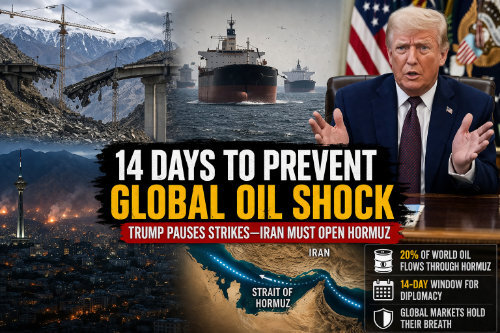
According to the signed memoranda, the administration is focusing on strengthening domestic production and infrastructure across oil, natural gas, coal, and electricity. The orders aim to ensure that U.S. energy systems can withstand potential disruptions tied to escalating tensions in the Middle East, particularly around the strategically vital Strait of Hormuz.
The measures include support for domestic oil output, expansion of liquefied natural gas (LNG) capacity, acceleration of pipeline projects, and reinforcement of the national power grid. Notably, coal—once on a path toward phase-out in U.S. energy policy—is being repositioned as a strategic reserve, underscoring the urgency of maintaining stable baseload power during a potential crisis.
Under the Defense Production Act, the federal government can require companies to fulfill national security contracts ahead of commercial obligations, provide financial incentives to boost production, and even restrict exports of critical resources such as oil. Supply chains can also be redirected to prioritize domestic needs, ensuring that essential materials remain within U.S. control.
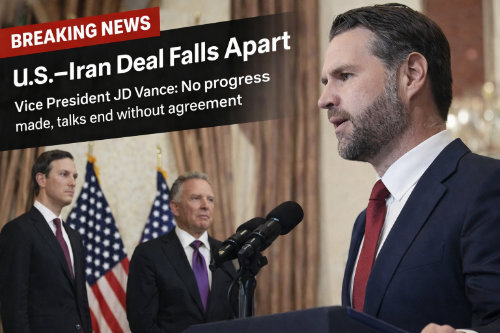
The timing is critical. Diplomatic efforts to extend or replace the current ceasefire have yet to produce a breakthrough. A second round of talks is expected in Islamabad, with Vice President JD Vance anticipated to participate. However, the administration’s parallel actions suggest limited confidence in a swift resolution.trump
Officials argue that without government intervention, the energy sector would struggle to respond quickly to wartime demands due to financing constraints, regulatory hurdles, and infrastructure limitations. By invoking emergency powers now, the administration is effectively placing the U.S. energy industry on a quasi-war footing.
As negotiations continue behind closed doors, one message from Washington is unmistakably clear: if diplomacy fails, the United States intends to be ready—not just militarily, but economically and energetically—for a conflict that could stretch far beyond the current ceasefire window.
 Max Liebermann
 -
-
JustTheFactsMax
1.4K views -
0 Comments -
0 Likes -
0 Reviews
-
-
JustTheFactsMax
1.4K views -
0 Comments -
0 Likes -
0 Reviews




 Loading ...


