The New Dietary Guidelines Signal a Reset -- Here's What That Means for Protein and Fat
By Jeff Volek, PhD
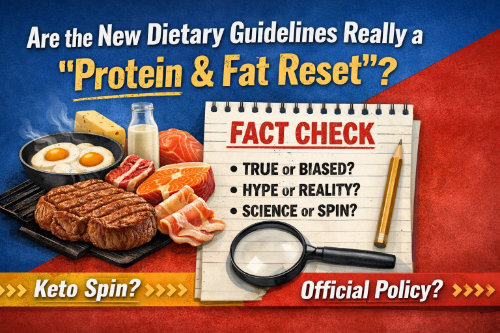
The recently released 2025-2030 Dietary Guidelines for Americans mark a long-overdue reset in federal nutrition advice.
Here's what Americans need to know.
For the better part of half a century, health officials treated protein as secondary to carbohydrate intake.
The updated guidelines flip that hierarchy. Meat, poultry, fish, eggs, and full-fat dairy -- alongside vegetables and fruits -- now form the foundation of a healthy diet.
The latest guidelines advise a daily protein intake of 1.2 to 1.6 grams per kilogram of body weight -- a meaningful increase from the longstanding 0.8-gram benchmark.
This shift matters because protein is the body's primary building block, supplying the essential amino acids required for tissue repair, immune function, and organ function. And it's the most satiating, or filling, macronutrient. In practical terms, 300 calories of candy or chips won't satisfy in the same way as 300 calories of full-fat yogurt or turkey.
Still, there's an important nuance missing in how these protein recommendations are applied. The guidelines suggest calculating protein needs based on current body weight rather than what’s referred to as "ideal" or "reference" weight for your height. Given that three-quarters of American adults are overweight or obese, this distinction is critical.
For many individuals with excess body fat, basing intake on current weight will overestimate protein targets, potentially leading to overconsumption of protein. Anchoring protein targets to ideal weight is a more precise way to achieve the benefits of protein.
Dietary fat presents a similar need for nuance. The new guidelines retain the recommendation that saturated fat make up, at most, 10% of daily calories. This cap -- rooted in outdated assumptions about fat and heart disease -- creates a practical contradiction with the guidelines' emphasis on whole foods like red meat and full-fat dairy. A breakfast of two eggs cooked in butter can bring someone near the daily limit before lunchtime. Thus, in practice, the 10% saturated fat cap is not realistic and not based on rigorous scientific evidence.
The updated guidelines now recognize that low-carbohydrate and ketogenic diets can be appropriate for certain chronic conditions, including obesity, type 2 diabetes, and cardiovascular disease. When people eat fewer carbohydrates -- such as sugar and refined grains -- the body shifts to fat as its main source of energy. In that setting, higher fat intake -- including saturated fat -- becomes the body's preferred fuel.
Research shows that saturated fat behaves differently when carbohydrates are reduced. In fact, despite eating two to three times more saturated fat on a ketogenic diet, blood levels of saturated fat actually decrease significantly alongside decreased insulin levels, while levels of HDL cholesterol -- the "good" cholesterol -- rise.
Put plainly: For individuals living with prediabetes, type 2 diabetes or insulin resistance, reducing refined carbohydrates while eating more dietary fat is not only safe but beneficial.
The 2025-2030 Dietary Guidelines represent the most promising opportunity in decades to turn the tide on our metabolic health crisis.
By calibrating protein targets to our target, or ideal, weights -- and modernizing how we think about saturated fat -- we can translate these new guidelines into real, lasting metabolic gains.
Jeff Volek, PhD, is a professor and researcher at The Ohio State University and an advisory committee member for the Coalition for Metabolic Health. This piece originally ran in the Ohio Capital Journal.
 News Staff
 -
-
Health
PhD
Guest column: Jeff Volek
2025-2030 Dietary Guidelines
-
1.2K views -
0 Comments -
0 Likes -
0 Reviews
-
-
Health
PhD
Guest column: Jeff Volek
2025-2030 Dietary Guidelines
-
1.2K views -
0 Comments -
0 Likes -
0 Reviews






 Loading ...


