DLNews Staff
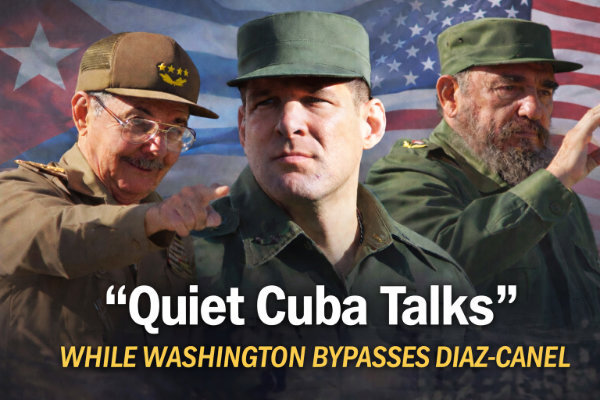
Quiet Cuba Talks: The Secret Castro Channel?
Havana/Miami — In a twist that feels almost cinematic in the long and tangled history between Washington and Havana, a member of the Castro dynasty’s third generation may now be quietly helping shape Cuba’s future.
According to several U.S. media reports, Raúl Guillermo Rodríguez Castro (40) — the grandson of Raúl Castro and great-nephew of revolutionary icon Fidel Castro — has reportedly held confidential contacts with U.S. representatives about possible future scenarios for the island nation.
The development is striking not just because of the talks themselves, but because of the name involved: Castro — a family that has shaped Cuba’s political destiny for more than six decades.
A Quiet Back Channel
Reports from Axios, The Washington Post, and The Wall Street Journal suggest that Rodríguez Castro has emerged as an unexpected intermediary in delicate conversations between officials connected to Washington and power brokers in Havana.
One of the most widely discussed claims is that Marco Rubio, the U.S. Secretary of State, may have spoken with Rodríguez Castro on February 25 during a regional meeting tied to the Caribbean Community summit in St. Kitts.
However, Rubio has declined to confirm such a meeting publicly. Other reports suggest that the Cuban figure may instead have met privately with members of Rubio’s diplomatic team at a nearby hotel.
Either way, analysts say the significance lies less in the meeting itself and more in who delivered the message.
The Man Behind the Curtain
Rodríguez Castro — known inside Cuban political circles by the nickname “El Cangrejo” (“The Crab”) — is considered a trusted insider within the island’s ruling elite.
He is the son of Déborah Castro Espín, a daughter of Raúl Castro, placing him firmly within the inner family circle of the revolutionary dynasty.
More importantly, he is believed to have served as a close security confidant to his grandfather, who remains an influential power figure despite formally stepping down from leadership.
His late father once headed GAESA, the powerful military-run conglomerate that controls major sectors of Cuba’s tourism, infrastructure, and retail economy — a position that placed the family near the center of Cuba’s financial machinery.
Bypassing the Current Government?
One detail that has particularly fueled speculation is that some reports claim the contacts were conducted without directly involving Cuban President Miguel Díaz‑Canel.
If true, the quiet diplomacy could signal that Washington is testing channels with individuals who have deeper influence behind the scenes — especially those tied to the historic revolutionary leadership.
Officials familiar with the discussions caution that the conversations are not formal negotiations, but rather exploratory talks about what Cuba’s future political and economic landscape might look like.
A Nation at a Crossroads
Cuba is facing one of the most difficult economic periods since the collapse of the Soviet Union. Energy shortages, inflation, food scarcity, and large-scale migration have placed enormous pressure on the island’s leadership.
That reality has revived discussions in diplomatic circles about whether the country may be entering another phase of gradual transformation.
And now, unexpectedly, a familiar surname from Cuba’s revolutionary past may again be appearing in the background.
For a country whose modern history began with the 1959 Cuban Revolution, the possibility that the Castro family name might still play a role in shaping Cuba’s next chapter is a development that few observers can ignore.
 News Staff
 -
-
Politics
Havana
Cuba
Raúl Guillermo Rodríguez Castro
-
1.2K views -
0 Comments -
0 Likes -
0 Reviews
-
-
Politics
Havana
Cuba
Raúl Guillermo Rodríguez Castro
-
1.2K views -
0 Comments -
0 Likes -
0 Reviews



 Loading ...


