JTFMax Biz:
Profit Over Peace: The Quiet Boom Behind a Loud War
In the grand theater of global conflict, where headlines are filled with destruction, diplomacy, and human suffering, there is—quietly, efficiently, and profitably—a different kind of performance underway. It doesn’t involve tanks or treaties, but tankers and trade routes. And business, as always, is brisk.
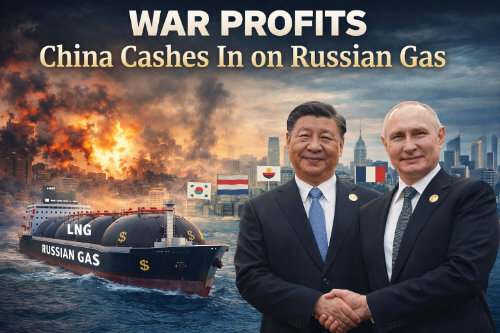
At the center of this unlikely windfall is a geopolitical partnership that seems less about ideology and more about opportunity. Russia, increasingly cut off from its once-lucrative European energy markets since the onset of the Ukraine war in 2022, has found itself in a position familiar to any struggling supplier: heavily dependent on its most reliable customer. Enter China.
Beijing is purchasing Russian pipeline gas at roughly $250 per 1,000 cubic meters. A respectable price—until one follows the journey of that same gas across the seas. There, it reappears in liquefied form, resold across Asia at approximately $830 per 1,000 cubic meters. The markup is not subtle. It’s the kind of margin that would make even the most seasoned Wall Street trader pause mid-espresso.
According to data from analytics firm Kpler, China has already resold at least 1.31 million tonnes of LNG this year—equivalent to 19 shiploads—surpassing last year’s volume of 0.82 million tonnes. South Korea, Thailand, Japan, India, and the Philippines have all been eager buyers, perhaps less concerned with the origin story than the urgency of supply.
The explanation is almost elegantly simple. China doesn’t need all the gas it’s buying. Domestic demand has softened, industrial consumption has dipped, and the heating season has passed. Meanwhile, stable pipeline flows and domestic production continue to fill reserves. The result: surplus gas—and a timely business opportunity.
Energy security expert Dr. Frank Umbach notes that China benefits not only from favorable long-term contracts but also from Russia’s reduced bargaining power. With Europe largely off the table, Moscow’s export strategy has shifted eastward, placing China in a position of considerable leverage.
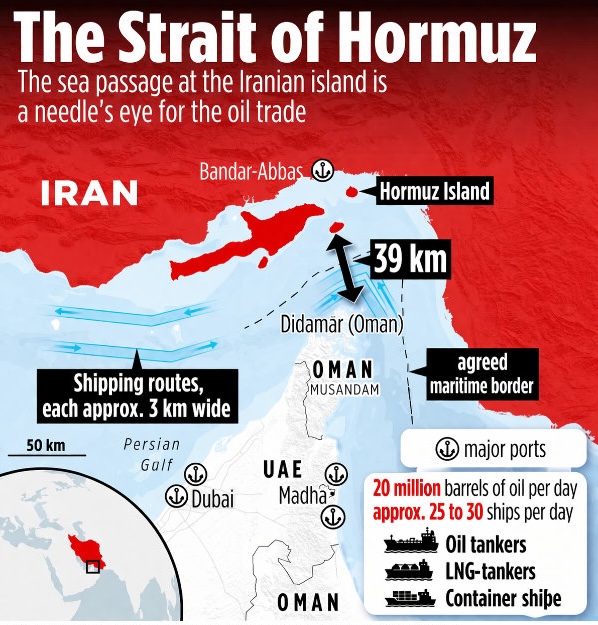
And then there are the shipping lanes—those invisible highways of global commerce that have become increasingly complicated. With tensions surrounding Iran affecting traffic through the Strait of Hormuz, many international vessels face heightened risks. Yet Chinese tankers, buoyed by strong ties with both Tehran and Moscow, continue to move with relative ease. In a world of bottlenecks, access is everything.
The result is a curious economic subplot to a very serious global crisis. While nations debate sanctions and stability, others quietly optimize margins and logistics. It is not a new phenomenon, of course—war has long had its beneficiaries—but rarely has the contrast felt quite so stark.
 JustTheFacts Max
 -
-
Business
Windfall Profits
China-Russia
LNG
-
297 views -
0 Comments -
0 Likes -
0 Reviews
-
-
Business
Windfall Profits
China-Russia
LNG
-
297 views -
0 Comments -
0 Likes -
0 Reviews