Hormuz Truce Under Strain
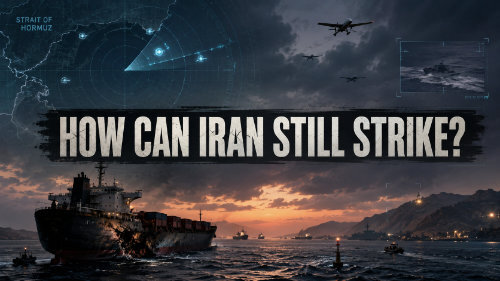
The latest U.S.–Iran framework agreement is facing its most serious test after the United States carried out strikes on Iranian military targets in response to an attack on a Singapore-flagged cargo ship near the Strait of Hormuz.
According to U.S. Central Command, American aircraft struck Iranian missile and drone storage sites as well as coastal radar stations after a drone attack damaged a merchant vessel identified by U.S. officials as the Ever Lovely. The ship was reportedly leaving the Strait of Hormuz near the Omani coast when it was struck. No injuries or environmental damage were immediately reported.
The attack came only days after Washington and Tehran reached an interim framework intended to reduce hostilities, reopen the Strait of Hormuz and create space for further negotiations over Iran’s nuclear program. The agreement was not a full peace settlement. It was a fragile pause built around maritime access, sanctions relief discussions and future nuclear talks.
U.S. officials described the Iranian action as a violation of the ceasefire and said American forces would continue supporting safe passage for commercial vessels through the strait. Iranian officials rejected Washington’s position, accusing the United States of violating the agreement through its retaliatory strikes. Iranian state media also reported explosions near Sirik, in Hormuzgan province, a coastal area close to the strategic waterway.
The immediate status of the framework remains uncertain. Neither side has formally abandoned the deal, but the incident shows how quickly the arrangement can be tested by actions at sea, competing claims over shipping routes and unresolved disputes over who controls passage through the Strait of Hormuz.
Iran’s ability to keep fighting, despite U.S. claims that its conventional military has been severely weakened, comes from the nature of the conflict. Iran does not need a modern air force or large blue-water navy to threaten shipping in a narrow waterway. The Islamic Revolutionary Guard Corps can rely on drones, mines, coastal radar, mobile launchers, small boats and dispersed weapons systems that are difficult to eliminate completely.
That does not mean Iran is militarily strong in a conventional sense. It means Iran can still create risk, disruption and political pressure at relatively low cost. In the Strait of Hormuz, even limited attacks can slow shipping, raise insurance costs, unsettle energy markets and pressure governments back to the negotiating table.
For now, the framework agreement is damaged but not necessarily dead. Its survival will depend on whether both sides can separate retaliation from escalation and whether mediators can keep the narrow maritime deal from collapsing before broader nuclear negotiations begin.
 News Staff
 -
-
Arts & Culture
U.S. Central Command
U.S.–Iran framework infringement
violation of the ceasefire
-
659 views -
0 Comments -
0 Likes -
0 Reviews
-
-
Arts & Culture
U.S. Central Command
U.S.–Iran framework infringement
violation of the ceasefire
-
659 views -
0 Comments -
0 Likes -
0 Reviews





 Loading ...


