JTFMax
Cut Off from the World
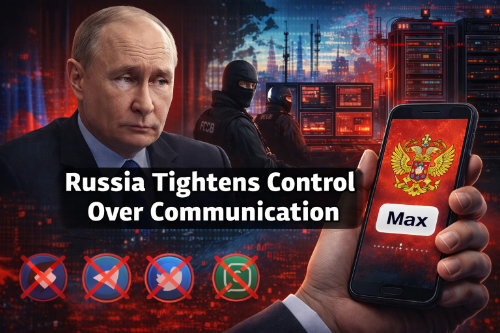
On the other side of the globe, far from the noise of Western debates about free speech and digital rights, a quieter but far more consequential transformation is unfolding. In Russia, the tightening grip of state control is moving decisively into the digital realm—where the internet, once a window to the world, is steadily being reshaped into a tool of surveillance.
Under Vladimir Putin, the Kremlin has long pursued the idea of a “sovereign internet.” What began as policy is now becoming practice. At the heart of this system is a legal and technical framework established in 2019, requiring internet providers to install monitoring equipment—known as “Technical Means of Countering Threats.” These systems allow regulators, particularly Russia’s communications watchdog, to filter and block content in real time, effectively deciding what millions of citizens can and cannot see.
Over time, the list of blocked platforms has grown. Western social media networks have been restricted or banned, and encrypted messaging services have faced mounting pressure. Companies associated with global platforms have been labeled “extremist,” while access to independent information sources has steadily narrowed.
But the latest developments go further still.
In early 2026, lawmakers approved new measures granting Russia’s domestic security service, the FSB, expanded authority over telecommunications. Mobile operators can now be ordered—without the previous requirement of a defined security threat—to suspend services. This shift, subtle in wording but sweeping in consequence, places unprecedented control over communication directly in the hands of the state.
At the same time, the Kremlin is pushing for the widespread adoption of a state-backed messaging platform. Unlike its global counterparts, this “national messenger” operates under conditions that many observers—and even Russian users—view with skepticism. Reports suggest that installing the app effectively opens a direct channel for monitoring, a perception that has fueled quiet resistance among the public. Yet authorities are increasingly requiring its use across universities, workplaces, and residential systems.
The broader picture is one of gradual digital isolation. Russia is not unplugging entirely from the global internet—but it is building walls within it, shaping a controlled environment where information flows are filtered, monitored, and, when necessary, shut down.
For the Russian people—long known for their cultural depth, intellectual tradition, and enduring resilience—this shift carries a quiet weight. From the era of the Tsars through the Soviet years and into the present, systems of control have evolved, but the underlying tension remains familiar: the balance between authority and individual freedom.
What is different now is the medium. In a world where communication defines connection, innovation, and opportunity, control over the internet is more than a policy—it is a reshaping of reality itself.
And as these digital boundaries tighten, the question lingers far beyond Russia’s borders: in an age built on connection, what happens when a nation turns inward, one signal at a time?
 Max Liebermann
 -
-
Technology
Russia
Vladimir Putin
“sovereign internet.”
“national messenger” Max
Kremlin
-
1.6K views -
0 Comments -
0 Likes -
0 Reviews
-
-
Technology
Russia
Vladimir Putin
“sovereign internet.”
“national messenger” Max
Kremlin
-
1.6K views -
0 Comments -
0 Likes -
0 Reviews






 Loading ...


