JTFMax:
A Ballroom, and a Few Big Questions
A sweeping proposal to construct a large new ballroom at the White House has become one of the most closely watched building projects in Washington in years, raising questions not only about architecture and diplomacy, but also about funding, oversight, and symbolism.
Plans under review call for a major addition designed to host large state dinners, diplomatic receptions, and ceremonial events. For decades, administrations of both parties have relied on temporary tents on the South Lawn when guest lists exceeded the East Room's capacity, which seats only a few hundred people. Supporters of the project argue that a permanent ballroom would improve security, logistics, and accessibility while reducing the need for costly temporary structures at major events.
On paper, that argument is straightforward. The controversy begins with how the project is being financed and approved.
Officials have said the ballroom would be funded primarily through private donations rather than taxpayer money, a practice that is not entirely unprecedented. Over the years, private funds have been used for restorations, furnishings, and certain improvements within the Executive Residence. Federal law does allow the White House to accept gifts and donations for specific purposes.
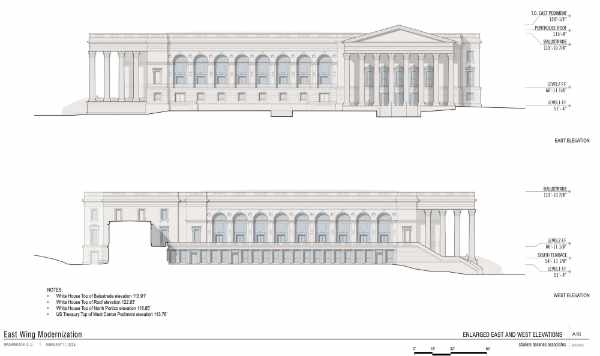
Estimated costs are around $400 million and going?
However, the scale of the proposed construction is far larger than that of most previous privately funded projects. Preservation advocates, architects, and some members of Congress have questioned whether a project of this magnitude should involve broader public review, historic preservation oversight, or direct congressional authorization. Legal challenges and regulatory reviews now underway are expected to clarify the level of approval required.
At the center of the debate is a broader constitutional and practical question: how much authority does a president have to alter a national landmark that belongs, ultimately, to the public? The White House occupies a unique legal position. It is both a working residence and a historic symbol, and that dual role has often made major changes more complicated than ordinary federal construction.
Beyond the legal details, public reaction has also been shaped by perception. A ballroom of this size would most often host heads of state, diplomats, major donors, and invited guests—the very people who already operate in the upper circles of power. To many Americans, that reality can make the project feel less like a national improvement and more like a stage built for the already-privileged.
Supporters counter that diplomacy has always involved ceremony, and that such gatherings are part of governing, not indulgence. Alliances are strengthened, negotiations advance, and relationships are built in settings that are often formal by design. From that perspective, a ballroom is less a luxury than a tool of statecraft.
Still, symbolism carries weight. The White House is not simply another government building; it is a national emblem that belongs, in spirit, to every citizen. Questions about transparency, oversight, and the role of private money therefore resonate far beyond Washington.
And perhaps that is the quiet irony of the entire debate: a room intended for celebration has instead become a mirror, reflecting a larger national conversation about power, privilege, and who truly feels represented inside the walls of America’s most famous house.
 JustTheFacts Max
 -
-
Arts & Culture
Washington DC
White House Ballroom
-
493 views -
0 Comments -
0 Likes -
0 Reviews
-
-
Arts & Culture
Washington DC
White House Ballroom
-
493 views -
0 Comments -
0 Likes -
0 Reviews