WORLD AT WAR | ANALYSIS
Attacks in the Caspian Sea: Is Iran now declaring war on Ukraine?
Tehran’s threats against Kyiv are unmistakable. But there is no evidence that Iran has declared war or decided to send troops.
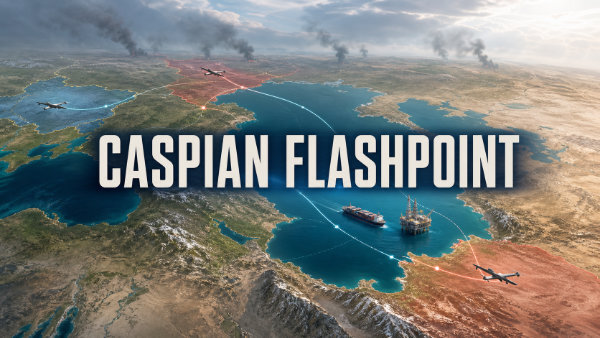
Kyiv/Tehran — The Caspian Sea has become a dangerous point of contact between two wars. Ukrainian drones have struck Russian military, energy and shipping targets there, while Iran says a separate attack on one of its merchant ships killed a sailor. Tehran has threatened retaliation—and reportedly considered firing a ballistic missile at a Ukrainian port.
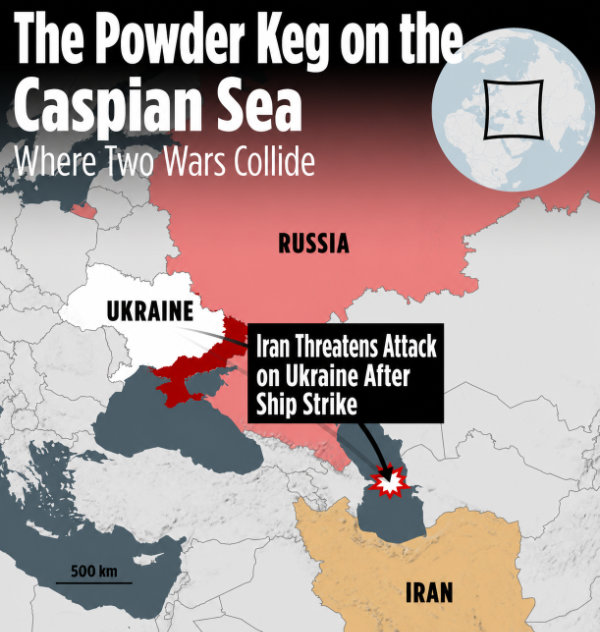
Yet Iran has not declared war on Ukraine. Nor is there credible evidence that Iranian soldiers are being prepared for deployment to the Ukrainian front.
Ukraine said its long-range operation on July 25 targeted a Russian Project 12418 Molniya missile boat, the cargo ships Port Olya 2 and Begey, and an offshore platform at Lukoil’s Filanovsky oil field. President Volodymyr Zelensky described the ships as vessels involved in transporting military cargo linked to Iran. The extent of the damage has not been independently established.
Iran, meanwhile, accused Ukraine of striking the Iranian-flagged cargo ship Anna. According to Tehran, an explosion aboard the vessel killed one sailor and injured another. Iranian officials insist that the ship was entirely civilian and carried no military cargo.
Kyiv has not publicly produced evidence establishing what was aboard the Anna, while independent analysts have been unable to verify Iran’s full account. It should therefore not be described as a tanker or as a proven weapons carrier.
Tehran considered a missile strike
Iranian Foreign Minister Abbas Araghchi called the attack a violation of the UN Charter carried out “at Israel’s behest” and said it “can’t go unanswered”. Ukraine’s diplomatic representative in Tehran was summoned, while Kyiv rejected Iran’s threats as groundless and accused the country of being a direct accomplice to Russian aggression.
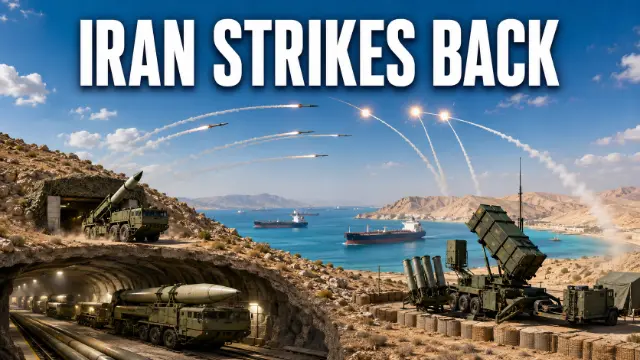
The most serious indication of possible escalation came from a report that Tehran had considered launching a ballistic missile with a small warhead at a Ukrainian Black Sea port as a symbolic response. A burst of diplomatic activity reportedly defused the confrontation for the moment.
No missile was launched, however, and it remains unclear whether Iran’s leadership had issued a final attack order.
Kremlin spokesman Dmitry Peskov added to the warnings, calling the attack on the Iranian merchant ship an aggressive act that, “in other times”, would have constituted a casus belli—a reason for war. He also said Moscow did not want to see the conflict’s geographical scope expand.
Peskov was describing the possible significance of the incident, not announcing an Iranian decision to enter the war.
Russian media have gone much further. Stanislav Krapivnik, a former US Army officer frequently presented as a military expert by the Russian tabloid Moskovsky Komsomolets, speculated that Iran could send tens of thousands of “volunteers” to fight Ukraine, following the example of North Korea. He also spoke of possible Iranian attacks on Zelensky and his government.
These claims are not evidence of Iranian policy. No Iranian government or military source has announced such plans, and there has been no verified troop movement, mobilization order or official decision supporting this scenario.
The Shahed connection
Ukraine’s choice of targets was not arbitrary. The Caspian Sea forms part of a well-documented transport corridor connecting Iranian ports with Astrakhan, Makhachkala and Olya in Russia.
The Begey—IMO 8943210—is under international sanctions. European authorities say the ship transported Iranian-made weapons and ammunition, including drone components, across the Caspian Sea to supply Russian forces. Maritime tracking data previously placed it at Iran’s Amirabad port before it sailed to Astrakhan.
The Port Olya 2—IMO 9481881—is a Russian general-cargo ship sanctioned by the United States because of its connection to a designated Russian shipping company. Ukrainian military intelligence says it has transported military cargo from Iran, although this does not independently establish what it carried during its latest voyage.
Amirabad itself was sanctioned by the European Union in 2024 because it was used to transfer Iranian drones, missiles, technology or components to Russia. That establishes the military significance of the route, but it does not prove that every ship using it—or every cargo aboard on July 25—was military.
At the centre of this relationship is the Shahed-136, the Iranian-designed one-way attack drone that Russia calls the Geran-2. Iran initially provided the technology and equipment. Russia subsequently established domestic production and introduced improvements to navigation and resistance against electronic interference.
These weapons have been used extensively against Ukrainian cities and infrastructure, killing civilians and forcing Ukraine to devote considerable resources to air defense.
Moscow’s assistance now flows back to Tehran
Military cooperation is no longer moving in only one direction. Zelensky has accused Russia of supplying Iran with satellite imagery of American bases and other targets in the Middle East.
Western and regional security sources have also reported unusually intense Russian satellite activity over the region and the sharing of imagery with Iran. The underlying intelligence has not been released publicly, so its precise operational impact remains uncertain.
Ukraine, in turn, has provided drone-defense expertise to countries and American facilities in the Middle East. Its experience against Shahed attacks has become valuable as US and allied forces struggle to stop large numbers of comparatively inexpensive Iranian drones.
The political connections are also becoming more visible. Zelensky and Israeli Prime Minister Benjamin Netanyahu briefly spoke and shook hands at the Washington funeral of Senator Lindsey Graham—their first in-person encounter since September 2023. Their foreign ministers separately discussed the threat posed by Iran.
This was a significant diplomatic signal, though not the formal Zelensky-Netanyahu summit some reports implied.
No declaration of war—but a real escalation
Iran has not declared war on Ukraine. The speculation about Iranian ground troops comes from a Russian commentator, not Tehran. The reported plan for a missile strike was considered but, according to officials, suspended after diplomatic intervention.
Nevertheless, the danger is real. A Ukrainian attack has reportedly killed an Iranian citizen, Tehran has explicitly reserved the right to respond, and military supply lines connecting Russia and Iran are now being attacked directly.
For the moment, the likeliest Iranian responses remain additional weapons support for Russia, cyber operations, covert action or a limited symbolic strike—not a large Iranian deployment to Ukraine.
But the boundary between the two wars is becoming harder to see. The Caspian Sea is now where Russian logistics, Iranian weapons, Ukrainian drones and the wider Middle East conflict meet.
 Max Liebermann
 -
-
World at War
Ukraine
Iran
World at War
Drones
Caspian Sea
-
495 views -
0 Comments -
0 Likes -
0 Reviews
-
-
World at War
Ukraine
Iran
World at War
Drones
Caspian Sea
-
495 views -
0 Comments -
0 Likes -
0 Reviews




 Loading ...


