Who's New at the Zoo?
-
7.5K Views
0 Comments
0 Likes
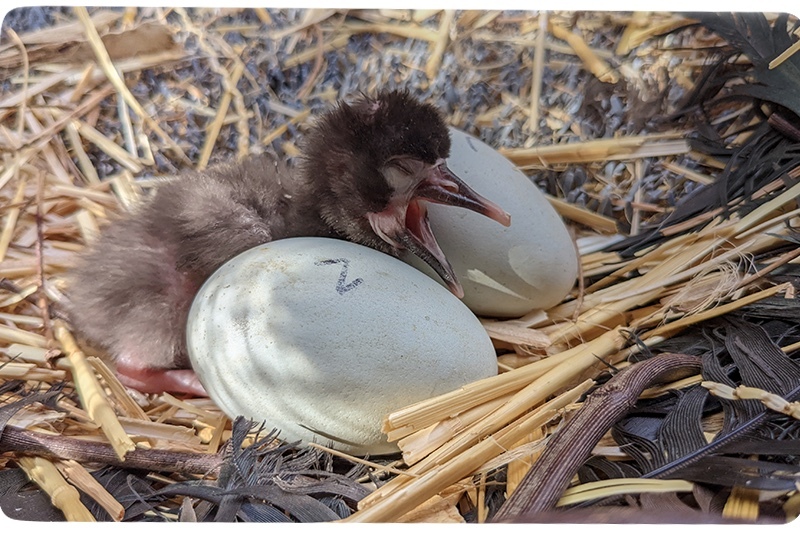
Meet, Khonsu, the Waldrapp Ibis
We are pleased to introduce you to the first Waldrapp ibis chick hatched at The Living Desert Zoo and Gardens in eight years! The Living Desert has a tradition of naming Waldrapp ibis after Egyptian royalty or deities, as they were very significant in ancient Egyptian culture. The newest addition to the flock, a male, was named Khonsu, after the ancient Egyptian god of the moon.
|
|
|
|
Also known as the Northern bald ibis, as adults, these raven-sized birds have iridescent black plumage, a long, downward-curving red bill, and long legs. Their bald heads are covered with wrinkled pink skin, and they have a shaggy ruff of black feathers around their neck, which is raised during courtship displays. The waldrapp ibis is found in the coastal areas of Morocco and other select areas of the Middle East.
|
|
|
|
|
|
Waldrapp ibis is currently listed as endangered by the IUCN (International Union for Conservation of Nature). The Living Desert is one of only nineteen AZA facilities that house this particular species.
Over the past several months, Khonsu has grown quickly and has transformed from a fluffy, gray chick, to a near-adult, with striking dark feathers. He is currently thriving alongside his family of five other ibises. You can visit them in the African Aviaries section of the park. Click here to learn about Khonsu's unique hatching story.
|
|
|
Did you know that you can become an agent of conservation by symbolically adopting one of the animals at The Living Desert, including the waldrapp ibis? Your gift enables us to continue providing the highest level of care to our animals, educate the next generation about the world's deserts, and conduct essential conservation programs and research. Adopt today!
|
|
The Living Desert Zoo & Gardens
Waldrapp Ibis